Clothing Made the Medieval Man, Woman & Child (Medieval Mondays #1)

Three versions of Maid Marion (a 13th century character), of which the fox's outfit comes closest.

Three versions of Maid Marian (a 13th century character associated with Robin Hood), of which the more authentic outfit is that of the fox.

If there’s one aspect of medieval history I love most, it’s the clothing, especially women’s clothing.

The clothing, incidentally, is one of the aspects Hollywood most often get wrong.

Typically, this occurs through clothing styles from one century being mis-attributing to another.  This despite what author Mary G. Houston writes in Medieval Costume in England and France: The 13th, 14th and 15th Centuries:

What can be more diverse than the noble simplicity of construction and natural silhouette of the thirteenth century, compared with the slender elegance of the fourteenth, and the riot of variety and exaggeration in the fifteenth century. (pp. v-vi)

Continue reading

The Medieval Times Was No Fairytale

Ever After

I often wonder if I would have enjoyed living in medieval England as much as I do writing about it.

Obviously the answer to this question depends upon a few considerations.  For example, does medieval me look the same as modern me?  There’s no reason to expect she wouldn’t, in which case, I’ll defer to comedian and social critic Louis C.K. for a response:

Continue reading

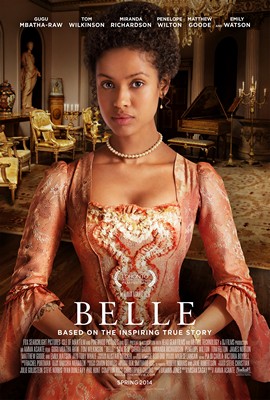
Character Study: Dido Belle Lindsay from Belle, history, the present & the future

Belle movie posterSOMETHING I LOVE MOST about historical fiction is the opportunity to contemplate the lives of little and lesser known people – those who weren’t among history’s winners whose story and version of events have been codified into what mainstream society accepts as The Way Things Actually Happened.

When I blogged about my favourite media of 2014, I included the movie Belle, which I watched during my plane ride home from Australia.

Continue reading

Are Characters Born or Made? (The “Meet My Character” Blog Tour)

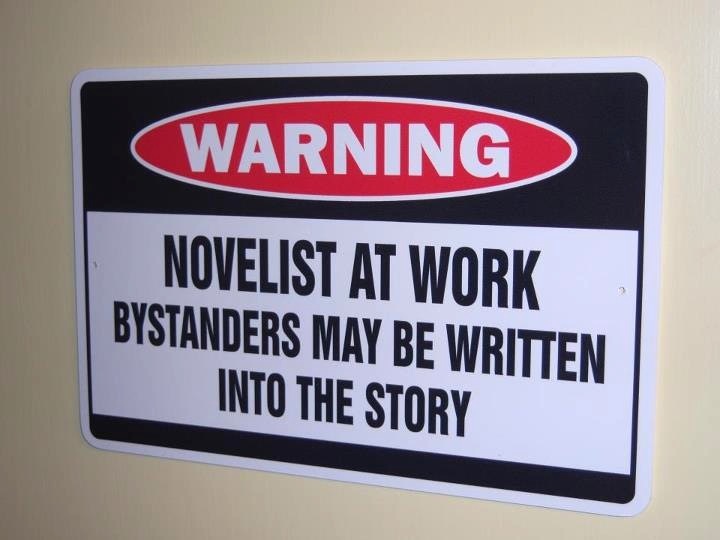
Novelist at work

Most writers, I’m sure, have heard tell of characters who seemingly develop “minds of their own” and “take over”  the stories they’re part of.

Maybe it’s happened to you.

Whether or not this phenomenon even truly exists was the subject of the second-most contentious discussion my writing group has ever had.

(The most contentious, unsurprisingly, concerned plotting vs. pantsing.  But that’s a story for another day.)

One writer from my group absolutely believed that characters can come to life, and that them doing so is a quasi-spiritual experience for the writer – a channeling of the divine, uncontrollable inspiration that exists all around us.

A writing of the story through us rather than by us.

Continue reading

How I’m Spending My Summer

Summer

No, it doesn’t involve an awesome vacation, but more on that in a bit.

I’m having a “working summer” this year. This isn’t unlike how I often have “working weekends”, during which I get caught up on all the errands, chores, and other adult-life necessaries I didn’t do during the week because I was busy writing.

Full-time jobs are hell on both writing time and fun, relaxing weekend time, though I guess we all need to suffer a bit for our art.

But I’ve currently got some BIG tasks that need doing.

Hence the working summer.

Continue reading

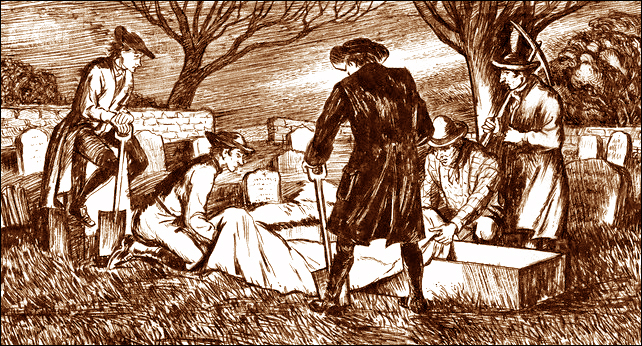
Bringing Up the Bodies: On resurrecting dead manuscripts

Every writer who’s been writing for a while has a dead manuscript stuffed away somewhere.

Be it a bottom drawer, bottom shelf, back of a closet, or in digital form in some dark oubliette on one’s hard drive, it’s something of a rite of passage for a writer to discover his/her novel (usually the first one) is an irredeemable mess, and for him/her to give it the axe.

But how many of those whacked novels refuse to go quietly into that good night? How many writers end up haunted by the ghost of what could have been – what still can be now that they’re stronger wordsmiths who have loved, lost, and learned the error of their once novice ways?

And for those who have had this experience, how many actually give into it and take another crack, as it were, at the title?

I’m seriously considering doing just that.

Continue reading

Sometimes Magic Just Works: 4 Q&As about my WIP

Ravenswing Dress - The Dark Angel Design Company, Photography - Lunaesque

The Dark Angel Design Company, photography by Lunaesque

Time to talk about my WIP again!

I never used to do this at all, as the thought of giving the dreaded “elevator pitch” makes my stomach churn like too much greasy pizza too close to bedtime.

But like anything bearing the label “dreaded”, said dread is usually lessened over time through devoting regular thought and effort to improving at the task at hand.

In other words, I need to practice pitching and promoting myself more.

Which is why, when tagged by my blog-buddy Eric J. Baker, to answer four questions about my WIP as part of the Writing Process Blog Tour, and I agreed to participate.

The four questions are thus as follows:

Continue reading

“For Diversity’s Sake”: On Representation in Fiction, One’s True Art & the Vicious Circle of Mainstream Media

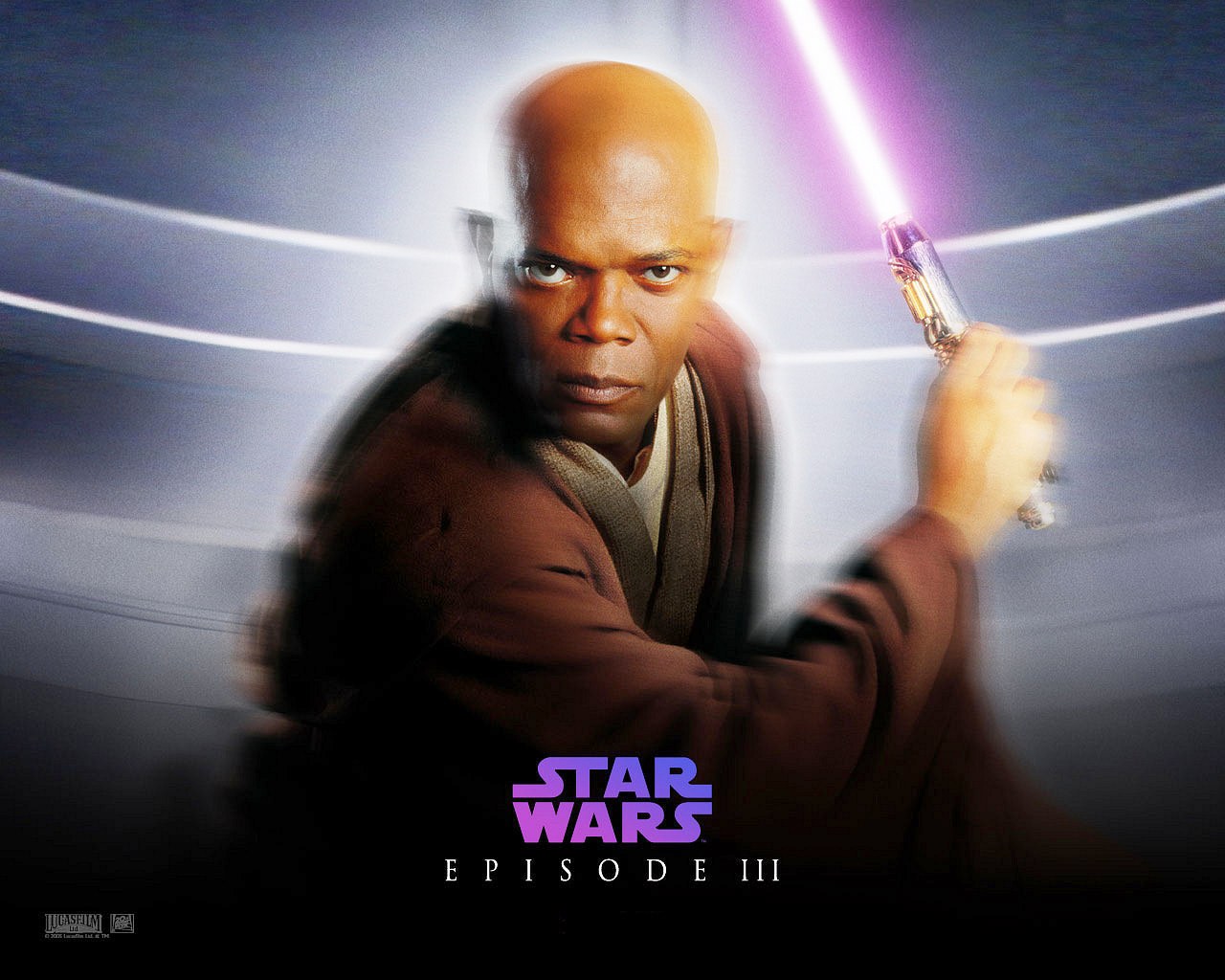
Samuel L. Jackson as Mace Windu, the first black Jedi.

Samuel L. Jackson as Mace Windu, the first black Jedi.

There’s been a lot of talk lately within the corners of the blogosphere I frequent about diversity of characters in genre fiction.

First fantasy author Chuck Wendig blogged in favour of book and movie characters being more representative of the world around us.

Then, indie fantasy author Ksenia Anske wrote about writers – diverse writers included –writing their true art – whatever shape or colour that may be – rather than being obliged to meet quotas of diversity – a compelling piece I neither fully agree nor disagree with.

This topic is hardly new within the writing world, with numerous other arguments out there both for and against the inclusion of more people of colour, of different sexual and gender orientations, and different physical and mental ability levels in genre fiction.

The “against” argument I despise the most is the concept of something I repeatedly saw in the comments trail of Chuck Wendig’s post.

The notion of “diversity for diversity’s sake”.

Continue reading

In Case of Fire, Save Writing!

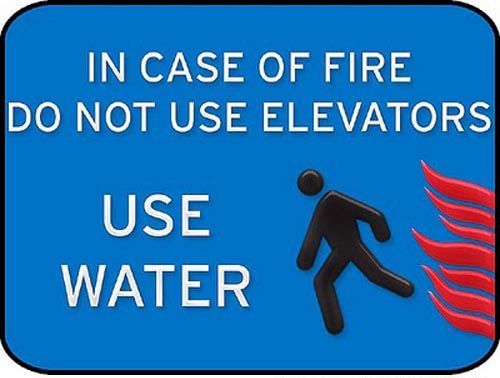
In case of fire

A few weekends ago, on a rainy Saturday afternoon, the fire alarm rang in my apartment.

I was dressed typically for me on a rainy Saturday, which is a step up from still being in my pajamas, although an admittedly small step.

In this case: fleece pants, a faded tank top, and merino wool lumberjack socks, with my hair, inasmuch as my dreads are always “done” since they don’t really change, hanging lank down my back from an earlier shower rather than pulled back or pinned up as I normally wear it.

Needless to say, I hadn’t been planning to go outside anytime soon, let alone to stand huddled amongst my neighbours while my building potentially burned to the ground.

And my building has had a fire in during the time I’ve lived here … the very night I moved in, no less.

Continue reading

Writing Historical Fiction: A How-NOT-To

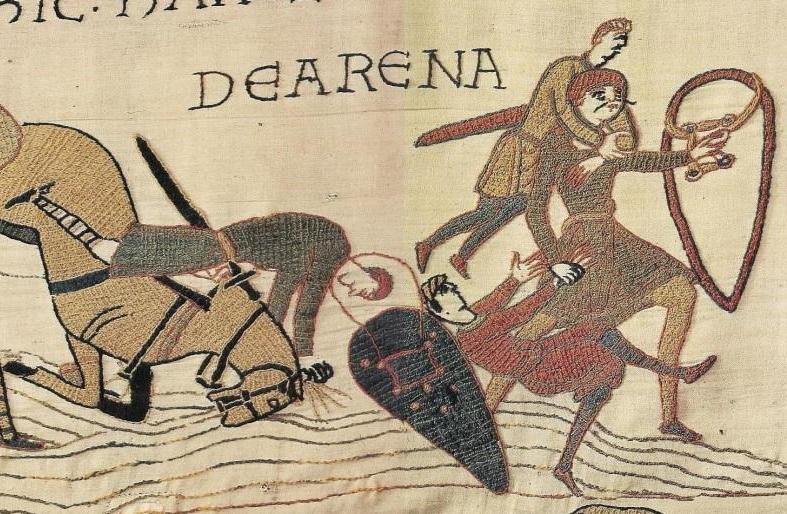
It sucks to be three out of four of these guys.
(The Bayeux Tapestry, 11th Century.)

I never set out to write a historical fiction novel.

If you go back far enough, it can be argued I never set out to write a novel period, for I never believed I’d be able to sustain a story for that length.

But once it did occur to me that I had a novel-length tale to tell, I didn’t expect for it to be a historical one.

As a result of this lack of foresight, the way I’ve gone about writing this novel (technically novels, for there’s two of them; so much for not thinking I could sustain a long story) is definitely not something I’d recommend.

There’s no one right way to write a novel, but what I’ve done may well be the one wrong way to write HF.  Don’t believe me?  Behold my list of what NOT to do, all of which I did, to my detriment.

Continue reading