Thoughts on Revising My Novel’s First Chapter

One chapter down, 30 more to go (in this draft)

One chapter down, 30 more to go (in this draft)

For a while, I honestly thought this day would never come: the day I finally got to start revising my WIP.

I never set out to write a trilogy.  That’s a whole lot of writing for anyone, but for me, being such a slow writer to boot, it at times felt near-insurmountable.

I’m convinced the only thing that got me to THE END of the first draft was the iron-like strength of my discipline.  I may have many shortcomings as a writer, but showed up at the page is not one of them.

Continue reading

Lifestyles of the Rich (and Poor) & Feudal – pt. 1 (Medieval Mondays #4c)

Medieval fealty

The medieval times, we’re well aware, hardly boasted an equal society.

Rather, the feudal system saw a single, all-powerful monarch as ruler of everyone and everything; a couple handfuls of earls or other magnates – direct liegemen of the king – below that; many more subinfeudated lords of lesser nobility below the magnates, sometimes two or three levels down; and finally, at the lowest levels of society, the non-noble peasants who held land in exchange for their labour upon it in producing their lord’s food.

Continue reading

Making Rent in the Middle Ages (Medieval Mondays #4b)

Medieval knights paying a portion of their "knight's fees"

Medieval knights paying a portion of their “knight’s fees”

In modern times, rents on property are paid in money.  In the medieval England and elsewhere, however, payment for a vassal’s fief or a villein’s farmland took a rather different form.

A vassal’s assorted obligations to his lord – his so-called “knight’s fee” – were collectively deemed military in nature.  However, as mentioned in my previous post on the feudal system, this isn’t to say all of a vassal’s responsibilities involved fighting.

Continue reading

Thoughts on Reading Through My Novel’s First Draft

My first draft chapters, bottom to top, colour coded by their revision needs

My first draft chapters, bottom to top, colour coded by their revision needs

It was like grading the world’s longest midterm paper.

Coming in at 402 pages and with all but the last two chapters having been written some ten years ago, I really had no idea what I was in for when, upon completing my first novel ever (technically my first trilogy, but I count it as one completed story), the time came to read through the entire first draft.

The age of the thing alone terrified me, for how well could a ten-year-old story possibly hold up?  I already knew going in that I’d have a fair amount of rewriting ahead of me, but the question was how much?

Continue reading

Resistance was Feudal (Medieval Mondays #4a)

Medieval commendation ritual

Medieval commendation ritual

Life in the medieval times was the ultimate pyramid scheme.  It was also a perilous numbers game in which, perhaps unsurprisingly, the number that trumped everything (except when it didn’t) was one.

In the history books, all of this is more commonly referred to as the feudal system, which was the dominant structure of society in England for some four hundred years, and in continental Europe, even longer.

In this first of three post on this subject, I’ll provide a general overview of what the feudal system was.

Continue reading

Getting Ready for Revision (for the Very First Time)

First draft manuscript

If I were to equate the current stage of my writer’s journey with that of the classic Hero’s Journey, I’d now find myself at stage sometimes referred to as “The Belly of the Whale”.

Which, in my opinion, is perhaps the most perilous of all the stages – even more so than the main confrontation of the story’s climax – for at this stage, the hero still doesn’t have a complete sense of what s/he is up against; a true, Rumsfeldian “unknown unknown”.

That is to say, I’m getting ready to revise my first completed novel.

Continue reading

Finally, I’m a Finisher (or, Holy Heck, I Wrote a Trilogy)

Book's last pages

Although Sag loves the thrill of a new project or friendship, you don’t always finish what you start. Work on keeping your promises and commitments.

(Source: http://astrostyle.com/sagittarius, among many others.)

~

I’m not a follower of astrology or other form of pop culture personality typing, but sometimes, it seems, these systems follow me.

I was born under the astrological sign of Sagittarius.  People of this sign are said to highly gregarious, to have an incurable wanderlust, and also to be notoriously distractible – to the point that they rarely complete what they start.

Even though I’ve never felt I embodied any of these hallmark Sagittarian traits, the presence of the last one in the above list has always caused me some distress.

Continue reading

Home is Where Too Many Hearts Were (Medieval Mondays #3b)

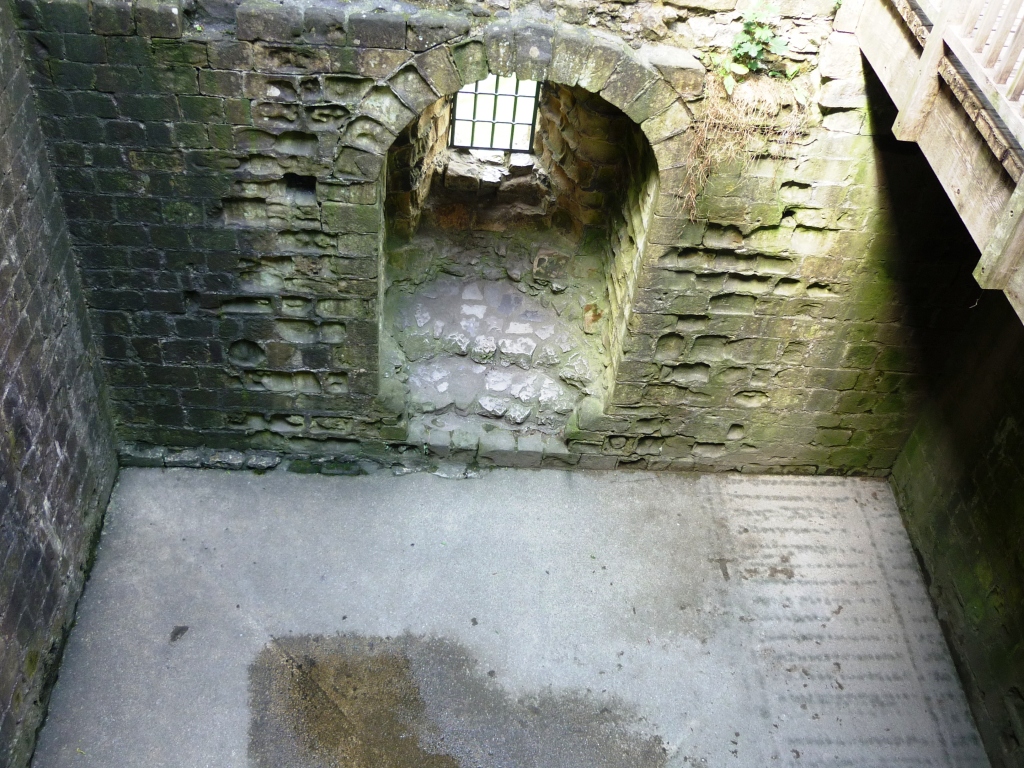
Remnants of Peveril Castle's keep: the basement as viewed from the upper level

Remnants of Peveril Castle’s keep: the basement as viewed from the upper level

Peveril Castle, located in Derbyshire, England – the site where much of my novel-in-progress takes place – had one of the smallest examples of a castle keep in England.

As shown in the artist’s rendition to the right, it contained only two rooms – a principal chamber and a basement underneath that was likely used for storage and accessed via a spiral staircase.

The keep also had a latrine, a wall cupboard, and a large window looking out over the rest of the castle and the surrounding Hope Valley, but it didn’t have a fireplace, any food service rooms, or even a well.

Continue reading

On Commemorating Personal Accomplishments with Nail Polish

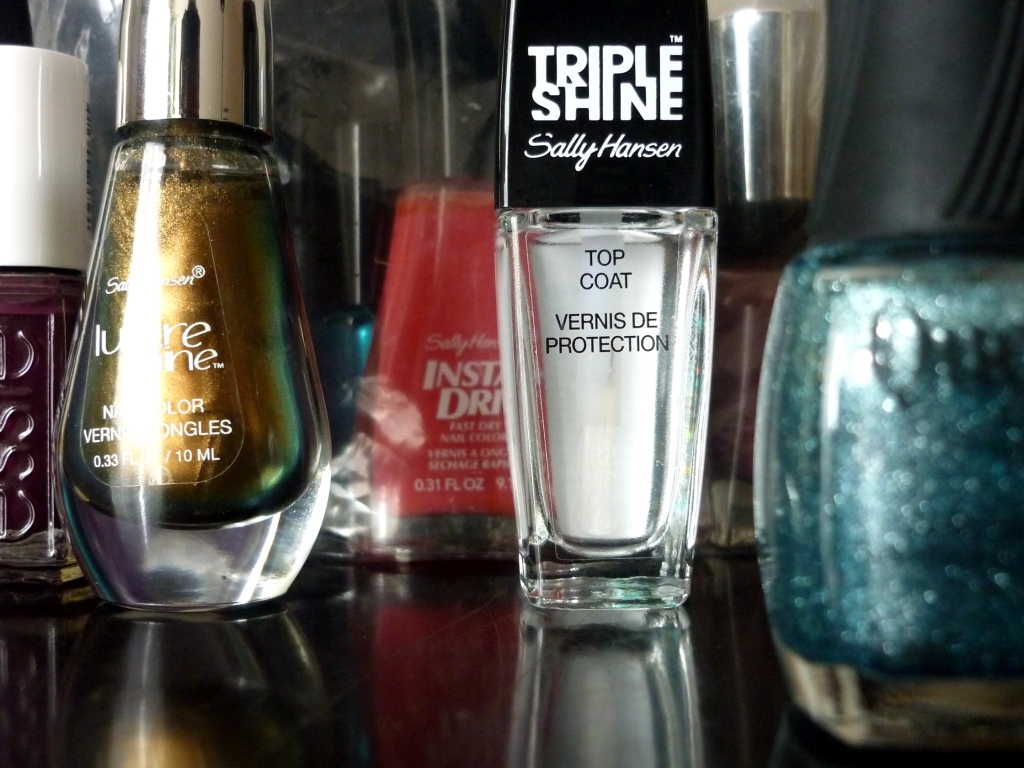
Nail polish

It all began with the random thought that occurred to me while at work on the final chapter of my WIP:

I should paint my fingernails so that when I finally type “The End”, I’ll do so in vivid colour to help me remember the moment forever.

It being the first attempted novel I’d have ever completed making the event something of a big deal to me.

Still, this notion to adorn myself was quite a departure for me.  I’m hardly a deft hand when it comes to personal ornamentation:

Continue reading

A Castle was a (Noble)Man’s (and Woman’s) Home (Medieval Mondays #3a)

Remnants of the keep and curtain wall of Peveril Castle in Derbyshire, England

Remnants of the keep and curtain wall of Peveril Castle in Derbyshire, England

As a child, I used to like drawing pictures of medieval castles.

These drawings always took a similar form: a large square in the middle of the paper, two taller turrets on either side, and a wall that extended the remaining length of the page on either side.  I even owned a stencil that had a guide for making square waves that I used on the upper edges of each part of the picture.

For a frontal, ground level representation by an eight-year-old, I actually think I did pretty well, having depicted the three key components of the average medieval English castle: the keep, the tower, and the curtain wall.

Continue reading