Love and Marriage in the Middle Ages (Medieval Mondays #5a)

A medieval betrothal

A medieval betrothal

Getting married in the medieval times was a complicated business.

On the one hand, it seemed straightforward enough – far less complicated than today:

  • Almost every man and woman could reasonably expect to someday wed.
  • The definition of marriage was not contested as it often is today: there was no same-sex marriage or common law marriage or the modern legal and political wrangling commonly associated with these.
  • Wedding ceremonies themselves were quite simple, wholly untouched by today’s wedding industrial complex.
  • Divorce was illegal, so when two people married, it was (in almost all cases) literally unto death.

Continue reading

Lifestyles of the Rich (and Poor) & Feudal – pt. 2 (Medieval Mondays #4c)

(Continued from part 1)

Medieval noblemanDespite the fact they resided at the top of the feudal pyramid, medieval noblemen were not all created equally.

Rather, noblemen were subdivided based on whether they were lords, heirs, or younger sons.

Continue reading

Lifestyles of the Rich (and Poor) & Feudal – pt. 1 (Medieval Mondays #4c)

Medieval fealty

The medieval times, we’re well aware, hardly boasted an equal society.

Rather, the feudal system saw a single, all-powerful monarch as ruler of everyone and everything; a couple handfuls of earls or other magnates – direct liegemen of the king – below that; many more subinfeudated lords of lesser nobility below the magnates, sometimes two or three levels down; and finally, at the lowest levels of society, the non-noble peasants who held land in exchange for their labour upon it in producing their lord’s food.

Continue reading

Making Rent in the Middle Ages (Medieval Mondays #4b)

Medieval knights paying a portion of their "knight's fees"

Medieval knights paying a portion of their “knight’s fees”

In modern times, rents on property are paid in money.  In the medieval England and elsewhere, however, payment for a vassal’s fief or a villein’s farmland took a rather different form.

A vassal’s assorted obligations to his lord – his so-called “knight’s fee” – were collectively deemed military in nature.  However, as mentioned in my previous post on the feudal system, this isn’t to say all of a vassal’s responsibilities involved fighting.

Continue reading

Resistance was Feudal (Medieval Mondays #4a)

Medieval commendation ritual

Medieval commendation ritual

Life in the medieval times was the ultimate pyramid scheme.  It was also a perilous numbers game in which, perhaps unsurprisingly, the number that trumped everything (except when it didn’t) was one.

In the history books, all of this is more commonly referred to as the feudal system, which was the dominant structure of society in England for some four hundred years, and in continental Europe, even longer.

In this first of three post on this subject, I’ll provide a general overview of what the feudal system was.

Continue reading

Home is Where Too Many Hearts Were (Medieval Mondays #3b)

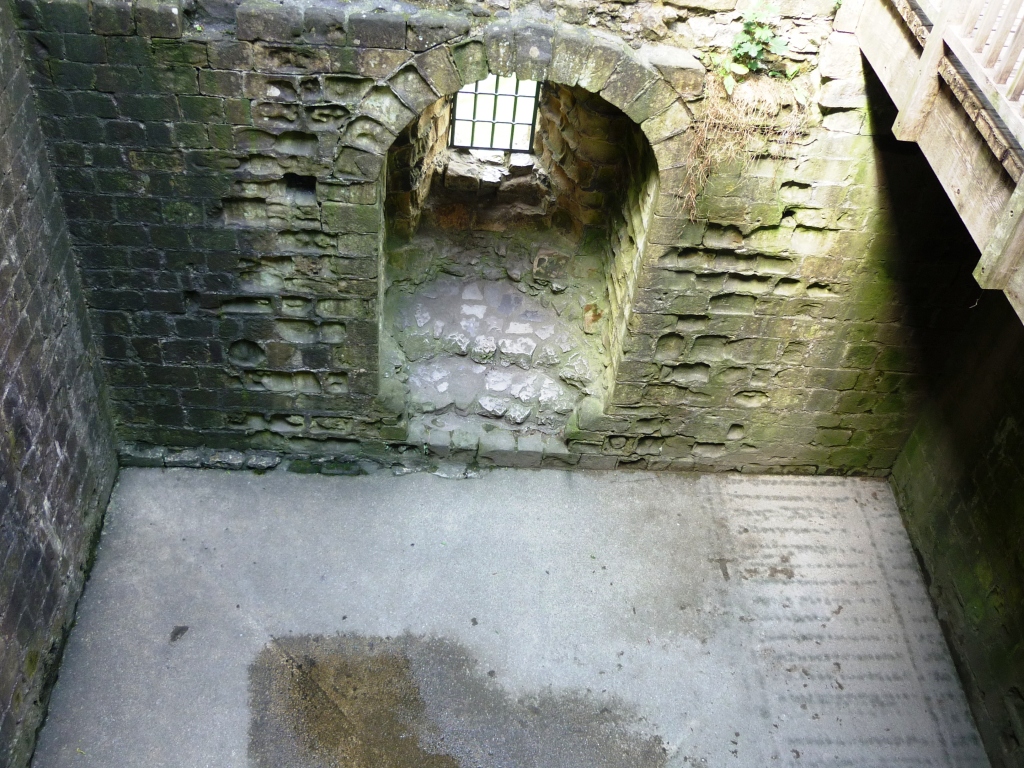
Remnants of Peveril Castle's keep: the basement as viewed from the upper level

Remnants of Peveril Castle’s keep: the basement as viewed from the upper level

Peveril Castle, located in Derbyshire, England – the site where much of my novel-in-progress takes place – had one of the smallest examples of a castle keep in England.

As shown in the artist’s rendition to the right, it contained only two rooms – a principal chamber and a basement underneath that was likely used for storage and accessed via a spiral staircase.

The keep also had a latrine, a wall cupboard, and a large window looking out over the rest of the castle and the surrounding Hope Valley, but it didn’t have a fireplace, any food service rooms, or even a well.

Continue reading

A Castle was a (Noble)Man’s (and Woman’s) Home (Medieval Mondays #3a)

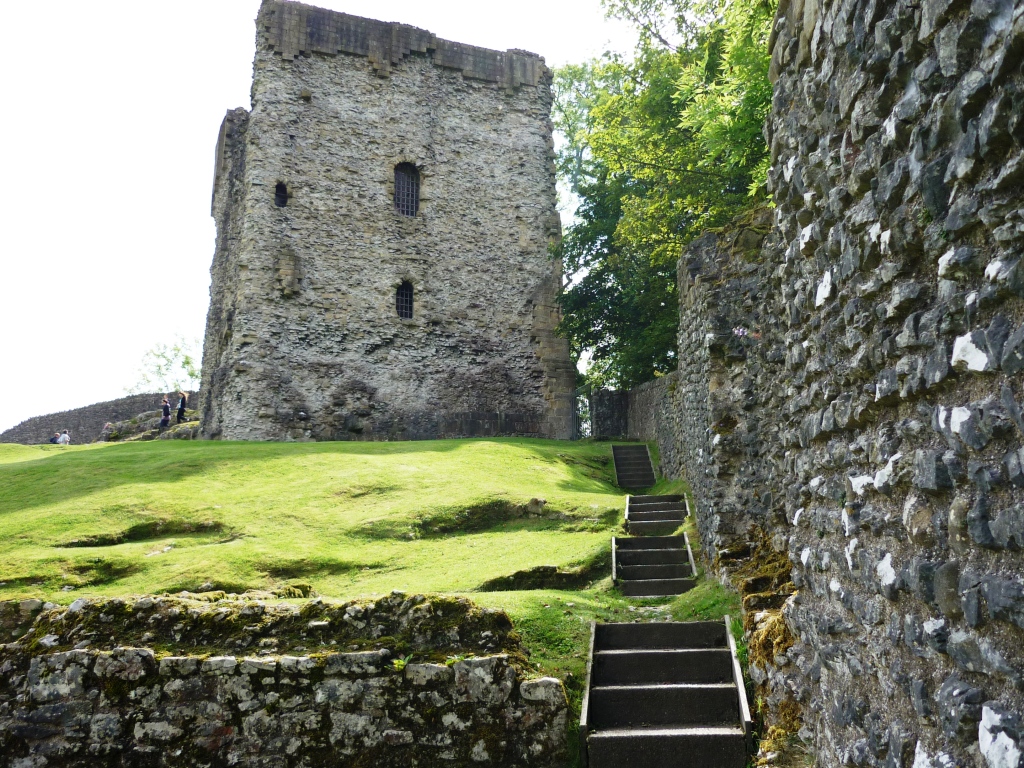
Remnants of the keep and curtain wall of Peveril Castle in Derbyshire, England

Remnants of the keep and curtain wall of Peveril Castle in Derbyshire, England

As a child, I used to like drawing pictures of medieval castles.

These drawings always took a similar form: a large square in the middle of the paper, two taller turrets on either side, and a wall that extended the remaining length of the page on either side.  I even owned a stencil that had a guide for making square waves that I used on the upper edges of each part of the picture.

For a frontal, ground level representation by an eight-year-old, I actually think I did pretty well, having depicted the three key components of the average medieval English castle: the keep, the tower, and the curtain wall.

Continue reading

Guess Who’s Coming to Dinner in the Middle Ages? (Medieval Mondays #2c)

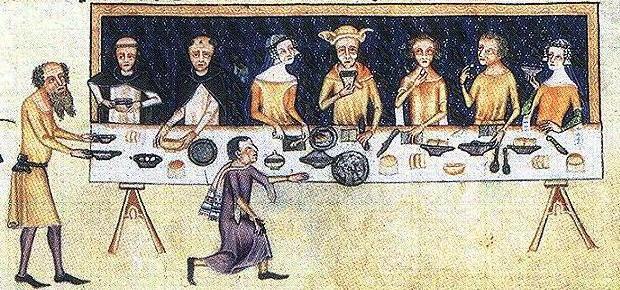
Dinner scene from the Luttrell Psalter (c.1320-1340, Lincolnshire, England)

Dinner scene from the Luttrell Psalter (c.1320-1340, Lincolnshire, England)

I first began this series on medieval food by questioning what sort of experience one would have if transported back in time to a 13th century dinner table.

The time has now come to take a seat at said table and finish finding out.

The very first point of difference one might encounter relates to the time of day “dinner” was actually served.  One might expect that turning up anywhere between 6:00 and 8:00pm as is common for modern dinners (particularly in North America) would also apply to the 13th century.

Continue reading

Medieval Meals Made Not-So-Easy (Medieval Mondays #2b)

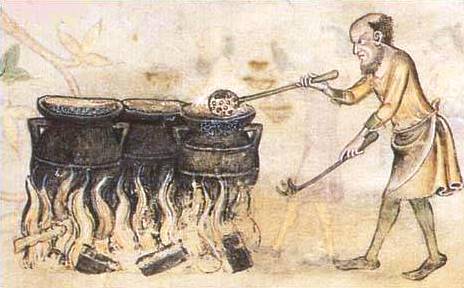
Cooking scene from the Luttrell Psalter (c.1320-1340)

Cooking scene from the Luttrell Psalter (c.1320-1340, Lincolnshire, England)

In the medieval times, our modern emphasis on easy, speedy meals would’ve been an inconceivably foreign concept to a noble family.

In my previous post on medieval food, I discussed the raw ingredients that comprised medieval cookery.

In turning now to discuss how that cookery was done and what recipes often resulted, a key point made by Margaret Wade Labarge, author of Mistress, Maids and Men: Baronial Life in the Thirteenth Century, is as follows:

The medieval baron liked a complicated and highly seasoned dish. (p.118).

Continue reading

What’s On the Menu in the Middle Ages? (Medieval Mondays #2a)

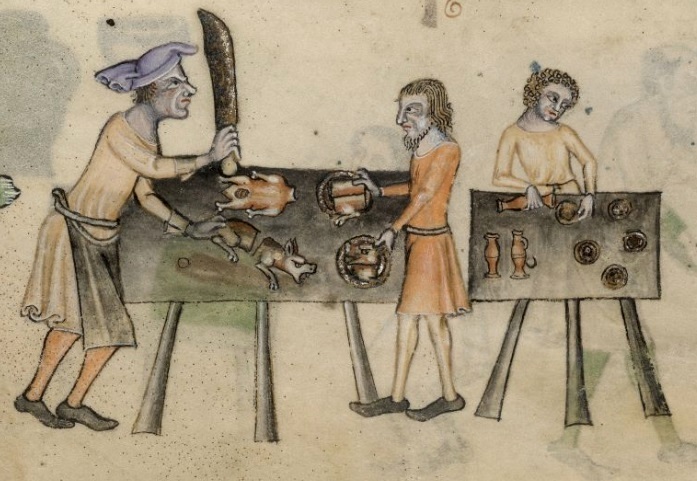
Kitchen scene from the Luttrell Psalter (c.1320-40)

Kitchen scene from the Luttrell Psalter (c.1320-1340, Lincolnshire, England)

If you were magically transported back to early 13th century England and invited to dinner in a noble household, what sort of experience would await you?

An experience so different, it will be the subject of three separate posts in this blog series, the first of which (today’s) focuses on the raw ingredients of medieval cuisine.

Continue reading