“Don’t steal my armrest! Quit wrecking my night vision!” (or, Why I Might Have to Stop Going to Concerts)

I am a music lover.

As I mentioned for one of the seven things about me when I was nominated for the Versatile Blogger Award, music is both the filing cabin and the encyclopedia of my mind.  It helps me make sense of my life through my tendency to categorize and understand my various experiences according to specific lyrics or sounds.

Music is also intrinsically tied into my writing life, for I can’t write well without it, and it likewise inspires my daydreams, my imagination, my stories.

My love of music was one of my largest motivators for finally giving up on shared living last year and getting a place on my own, for I couldn’t play my stereo at 6:30am since my roommates didn’t get up that early.

My love of music also resulted in a 30km-journey to the suburbs by public transit to buy a pair of high-end second-hand Harman/Kardon speakers.  I hate public transit.  I’m not wild about the suburbs either.  But I believe that true enjoyment of music is obtained, not through earbuds, but when it’s played aloud and you can feel it in your solar plexus and the soles of your feet.

Hence, my love of concerts.
Continue reading

Places That Don’t Exist (Anymore)

(A/N: Post title is a play on the song Places That Don’t Exist by Conjure One.)

Two of the first things people want to know upon learning I’m writing is historical fiction novel is where and when it takes place.

The answers, for the record, is England in the early 1200s, but there’s so much more involved in creating a story setting in any genre than just choosing an era and location on a map.  There’s even more to it than just descriptions of what the building and scenery look like.

In his book Characters & Viewpoint, science fiction author Orson Scott Card refers to the setting of a story as the milieu, which he defines as the following:

The milieu is the world surrounding characters – the landscape, the interior spaces, the surrounding cultures[,] … everything from weather to traffic laws.  [It] includes all the physical locations that are used … with all the sights, smells, and sounds that come with the territory.  The milieu also includes the culture – the customs, laws, social roles and public expectations that limit and illuminate all that a character things and feels and says and does. (pp. 48-49).

Readers love to feel as though they’ve been transported into the world of the story.  A large part of that is achieved by creating an authentic setting.  One thing a writer can do to better capture both the structure and mood of where his/her story takes place is to visit the site in real life.  Reference books and Google Maps, after all, can only take you so far.

I indeed visited that part of England where my novel-in-progress is set, however, my novel-in-progress is historical fiction, which means the locale I toured through last summer is a much different place now than it was eight hundred years ago. The specific era of my story setting is long bygone, and very little in its modern incarnation can be back-cast to the past.

This thus leads me to wonder: when it comes to the task of creating a sense of place out of places that don’t exist anymore, is my job as a historical fiction writer easier or more difficult than that of writers of other genres?

Continue reading

There were no “Likes” in 2006… (Versatile Blogger Award)

Blogging has changed since the last time I did it during the dark ages of the internet in 2006.

Today we have the integrated blog stats that WordPress so thoughtfully provides us all, informing me at a glance how many clicks I’ve received per day and what the clickers were clicking on and where the clickers came from, both geographically and via the internet.

We have “Likes”, which on all but the most popular blogs have replaced the standard comments of yesteryear.  There were no such thing as Likes in 2006.  If you liked something someone wrote, you would tell them by leaving a comment and let them know what exactly you liked about it.

(Not that I’m at all complaining: the world is a much busier place than it was in 2006, and comments take time to compose while Likes are quick and dirty.  I’m grateful to know at all when stuff I write resonates with people.)

We also now have blog subscribers, which I love love love, both having them and to be one.  There was nothing more annoying back in 2006 than to have to constantly check your favourite blogs for updates, especially for writers who posted multiple times a day.

And yet, despite all these innovations for tracking one’s visitors, I still have no idea who is reading my blog, and perhaps more importantly, how they’re doing so.

Continue reading

Tell It Like It Was

(A/N: Post title is a play on the song Tell It Like It Is by Tracy Chapman.  I don’t know what it is about this series of topics that lends itself well to making post titles out of modified song titles, but I plan to keep rolling with it as far as it will go.)

Every writer has to conduct some manner of research to inform his/her story.

Even when writing a memoir or a tale otherwise drawn completely from personal experience, I’m willing to bet the writer will need to look up or into something, whether it’s the layout of a city or the history of a particular landmark, or the number one single on Billboard at the time.

In historical fiction, however, the research needs are as astronomical as they are minute.  Not only must one research the plans of cities (that may or may not still exist), you also need to know what the roads were paved with.  Information about a landmark might be coupled with that about what was fed to the slaves that built it.  The names of popular songs might be accompanied (no pun intended) by details on what the stringed instruments of the time period were strung with.

And that’s not all; not by a long shot.

Continue reading

Only in the Past

(A/N: Post title is taken from the song of the same name by The Be Good Tanyas.)

What exactly is historical fiction, anyway?

I’ve been actively writing it for five months now, and thought about writing it for at least two years prior to that.  But it’s only in the past two months that I’ve actually stopped to ponder what historical fiction is really all about as a category of novels.

I have a blogger that I follow to thank for this period of reflection.  Over at the blog entitled On Becoming a Wordsmith, historical fiction writer Elaine Cougler has been generating good discussion on this topic, starting with this post and continuing with this one.

According to Elaine (quoting Wikipedia), at its simplest, historical fiction is defined as follows:

Historical fiction tells a story that is set in the past. That setting is usually real and drawn from history, and often contains actual historical persons, but the main characters tend to be fictional. Writers of stories in this genre, while penning fiction, attempt to capture the manners and social conditions of the persons or time(s) presented in the story, with due attention paid to period detail and fidelity.

From what I gather from the discussion over at Elaine’s blog, the historical fiction genre (and I use the term “genre” very loosely here, as the second post I’ve linked above raises the issue of whether historical fiction is truly a genre at all), can be further divided into two broad subcategories:

a) Stories that contain actual historical personages and historically accurate events.

b) Stories in which the era and location they’re set in is historically accurate, but the characters (and perhaps even the events as well) are fictitious.

Continue reading

Building a History

(A/N: Post title is a play on the song Building a Mystery by Sarah McLachlan.)

I never planned to become a writer of historical fiction.

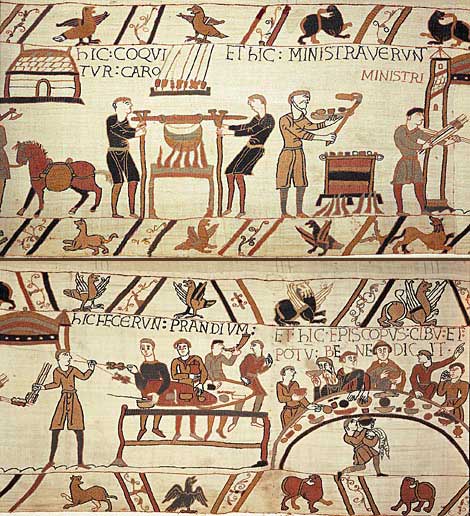
Cooking and feasting – The Bayeux Tapestry, circa 1070, England

From what I gather from various authorities on the matter, no sane person ever would.

When I first started taking myself seriously as a writer and writing with a view to someday attempt getting my work published, fantasy was my genre of choice.

Fantasy, after all, was the genre unbounded by the rules of the modern world, and even the natural world.  It was the genre in which anything could happen so long as it was properly motivated and followed some manner of internal consistency.

It was the genre in which you could make your own rules.

Continue reading

My Writing Journey – finale

Continued from Part 1, Part 2, Part 3, and Part 4:

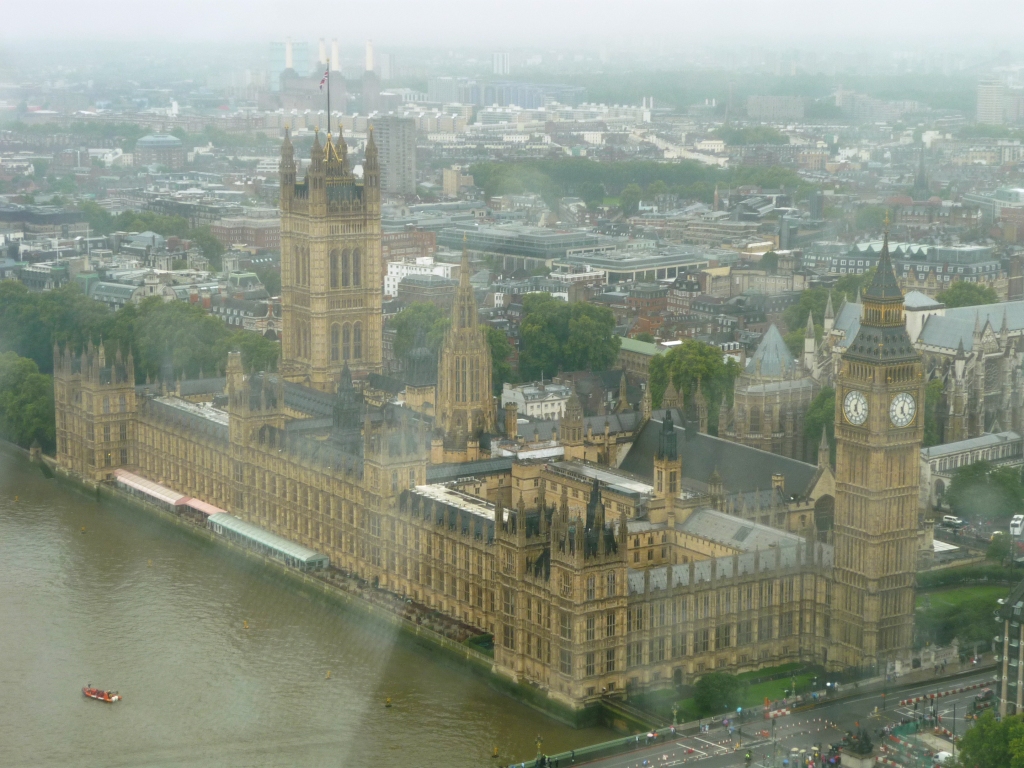
England’s Parliament building and Big Ben shot from the London Eye, in the rain (Photo: J. Noelle).

I told myself it would be best to take a short break from writing – just until I’d had a chance to settle into my new job and home, and establish myself socially.

That “break” lasted six years.

They say that love is blind.  I’d like to submit my own saying: love can make you stop writing.  Especially when it is unrequited love.  For my time away from writing my novel did indeed involve unrequited love, as well as obsession of an entirely different sort, rivalry, a joking/not joking threat of getting shoved off a boardwalk, and is practically a novel in its own right.

I’m not going to discuss it in any detail, for though it was a significant experience in my life that would go on to shape many things to come and perhaps even still does, it’s not a part of my “story” that I wish to continue living and carrying around with me.

I will concede that it was a time that allowed me to develop other interests, skills, and facets of my personality.  Yet my pursuit of all that stuff (not to mention “the guy”) was no less balanced than when I was deep in the throes of Obsessive Writer’s Disorder – writing nonstop during meals and when I should have been sleeping.

All that’s in the past.

This is the future.

Continue reading

The Answer to an Even Bigger Question

Rule of Engagement 3.2

I love numbers.

Don’t get me wrong; I’m not some sort of mathematician.  I’m not even all that adept at numerical manipulation: in restaurants, like many, I struggle to calculate my portion of a group bill, and to also figure out an appropriate gratuity, and somewhat typical of my generation, I generally can’t perform long division in my head unlike the many people of my parents’ generation who can.

Still, though, numbers hold a place in my heart, or at least, the idea of numbers does, as does what they represent.  For in numbers, I see a concrete means of comparing two or more different states of being: how something is to how it could or should be; how something is to how it was previously; where something started and where it ends.

In short, numbers can be used to monitor change and – more importantly – progress.

And what writer isn’t interested in that?

Continue reading