Love and Marriage in the Middle Ages (Medieval Mondays #5a)

A medieval betrothal

A medieval betrothal

Getting married in the medieval times was a complicated business.

On the one hand, it seemed straightforward enough – far less complicated than today:

  • Almost every man and woman could reasonably expect to someday wed.
  • The definition of marriage was not contested as it often is today: there was no same-sex marriage or common law marriage or the modern legal and political wrangling commonly associated with these.
  • Wedding ceremonies themselves were quite simple, wholly untouched by today’s wedding industrial complex.
  • Divorce was illegal, so when two people married, it was (in almost all cases) literally unto death.
Continue reading

On Appropriation, Censorship, and the World of Possibility in Between

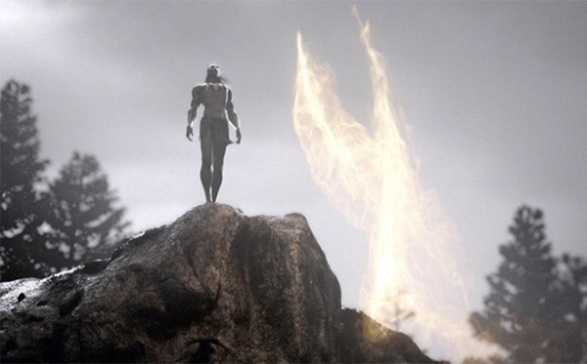
Image of a Native American man from J.K. Rowling's History of Magic in North America.

Image of a Native American man from J.K. Rowling’s History of Magic in North America.

How do I know if I’m appropriating the traditions of another culture in my writing versus creating a respectful adaptation?

Admittedly, this isn’t an issue I’ve devoted much thought to in the past.  Of late, however, following the J.K. Rowling #MagicInNorthAmerica controversy, it’s been on my mind a fair bit.

For those not familiar, #MagicInNorthAmerica has to do with a series of fictional monographs discussing the history of magic in the Harry Potter universe.  Harry Potter author J.K. Rowling recently released these on her Pottermore website to promote the release of the upcoming movie Fantastic Beasts and Where to Find Them.

Continue reading

The Things We Do for Love (of Writing)

TrigonometryI’ve had a cough for the last three months.

Coughing isn’t a customary occurrence for me.  Neither is having any sort of illness linger for so long.

Part of the problem is that the cough, if one can be said to be such, is largely asymptomatic.  Which is to say a cough is all I have: no sneezing and sniffling of a cold, no aches and pains and lethargy of the flu.

Even the doctor says there’s nothing pathologically wrong with me.

Continue reading

Lifestyles of the Rich (and Poor) & Feudal – pt. 2 (Medieval Mondays #4c)

(Continued from part 1)

Medieval noblemanDespite the fact they resided at the top of the feudal pyramid, medieval noblemen were not all created equally.

Rather, noblemen were subdivided based on whether they were lords, heirs, or younger sons.

Continue reading

It’s Hip to be Square (Dancing).  It’s pretty darn fun as well!

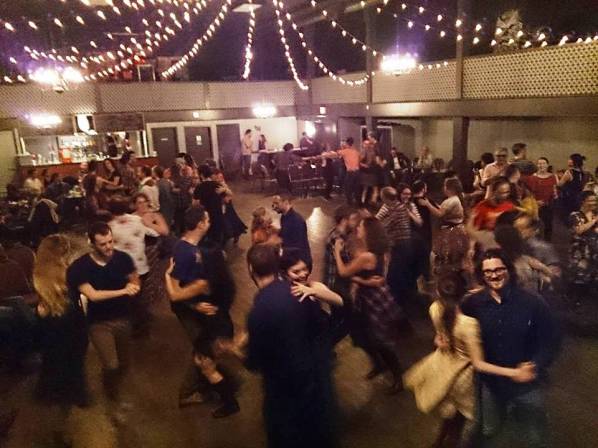
The scene at a recent square dance in Vancouver, BC.

The scene at a recent square dance in Vancouver, BC.

The first time I ever square danced was in Hope, British Columbia.

This was a good six or seven years ago while I was attending a canoeing skills camping weekend retreat with a group of friends.  I’m as outdoorsy as the next person, but not specifically into canoeing.

Rather than a desire to perfect my J-stroke, I recall my decision to tag along having more to do with FOMO and, if I’m to be honest with myself, the possibility of meeting new people (read: single guys) since the present object of my affection – who was also in attendance and a skilled canoeist – couldn’t care less about me in that way.

Continue reading

Lifestyles of the Rich (and Poor) & Feudal – pt. 1 (Medieval Mondays #4c)

Medieval fealty

The medieval times, we’re well aware, hardly boasted an equal society.

Rather, the feudal system saw a single, all-powerful monarch as ruler of everyone and everything; a couple handfuls of earls or other magnates – direct liegemen of the king – below that; many more subinfeudated lords of lesser nobility below the magnates, sometimes two or three levels down; and finally, at the lowest levels of society, the non-noble peasants who held land in exchange for their labour upon it in producing their lord’s food.

Continue reading

What’s New for the New Year? (or, On My Ongoing Efforts to Get Sh*t Done)

Toshiba factory reset

What’s new for me for 2016?  In a word, not a heck of a lot.

For all that that’s actually six words.

New Year’s is my favourite time of the year.  I love new beginnings and the opportunity to forecast what shape the coming year will take by setting goals to help chart its course and advancement.

Given this, I’m no stranger to New Year’s resolutions.  I even have a fairly decent record of achieving them.

Continue reading

Making Rent in the Middle Ages (Medieval Mondays #4b)

Medieval knights paying a portion of their "knight's fees"

Medieval knights paying a portion of their “knight’s fees”

In modern times, rents on property are paid in money.  In the medieval England and elsewhere, however, payment for a vassal’s fief or a villein’s farmland took a rather different form.

A vassal’s assorted obligations to his lord – his so-called “knight’s fee” – were collectively deemed military in nature.  However, as mentioned in my previous post on the feudal system, this isn’t to say all of a vassal’s responsibilities involved fighting.

Continue reading

Resistance was Feudal (Medieval Mondays #4a)

Medieval commendation ritual

Medieval commendation ritual

Life in the medieval times was the ultimate pyramid scheme.  It was also a perilous numbers game in which, perhaps unsurprisingly, the number that trumped everything (except when it didn’t) was one.

In the history books, all of this is more commonly referred to as the feudal system, which was the dominant structure of society in England for some four hundred years, and in continental Europe, even longer.

In this first of three post on this subject, I’ll provide a general overview of what the feudal system was.

Continue reading

Home is Where Too Many Hearts Were (Medieval Mondays #3b)

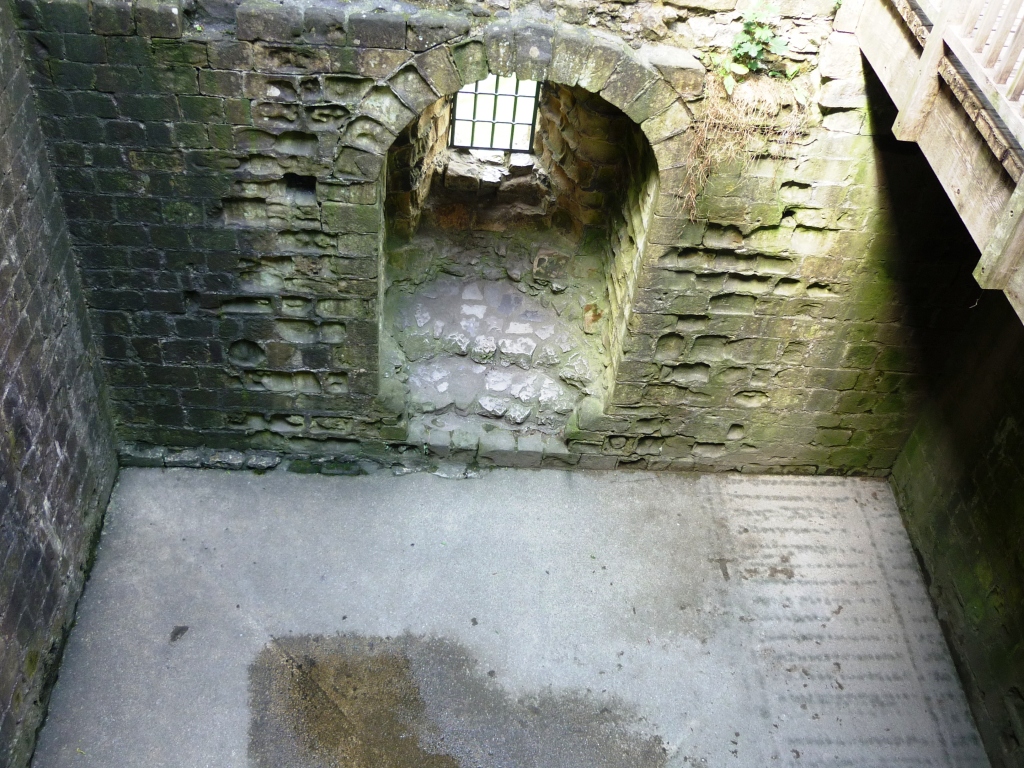
Remnants of Peveril Castle's keep: the basement as viewed from the upper level

Remnants of Peveril Castle’s keep: the basement as viewed from the upper level

Peveril Castle, located in Derbyshire, England – the site where much of my novel-in-progress takes place – had one of the smallest examples of a castle keep in England.

As shown in the artist’s rendition to the right, it contained only two rooms – a principal chamber and a basement underneath that was likely used for storage and accessed via a spiral staircase.

The keep also had a latrine, a wall cupboard, and a large window looking out over the rest of the castle and the surrounding Hope Valley, but it didn’t have a fireplace, any food service rooms, or even a well.

Continue reading