Why I (Literally) Went Medieval on My Writing

There’s a restaurant in Toronto called Medieval Times.

When I was a kid, I would see commercials for it on TV. The gimmick of this restaurant is that it’s set up like a large medieval hall in which patrons are entertained by knights sword fighting and jousting on real horses, all while eating medieval-esque fare without cutlery and drinking out of giant goblets.

To my child self, it looked like the most awesome thing ever. Whenever the commercial (which was more like a movie trailer) came on, I’d stop whatever I was doing and imagine myself going to the restaurant.

Unfortunately, because I was living in Nova Scotia, I never got to go.  I still haven’t been to this day.

Now, I’m writing a novel set in medieval England.

Continue reading

How to Read 12 Books in a Year (with minimal change to your regular reading habits)

Cat readingThere are people out there who read like fifty books a year.

This post is not for them.

(Indeed, I wish one of them would write their own post to teach me to read more.)

Reading is my oldest pastime, yet the older I get, the less time I seem to have for it.

I don’t ever want to stop reading books.  But life is busy and full of countless distractions, not the least of which include writing, socializing, finally watching Homeland on Netflix (seriously, have you seen that show?!), and of course working – by far the biggest occupier of my time.

Last year for New Year’s, I resolved to read 12 books for the year. A book a month-ish, as I took to calling it given the overlap of some calendar months that occurred.

Continue reading

Should Authors Be Good Role Models?

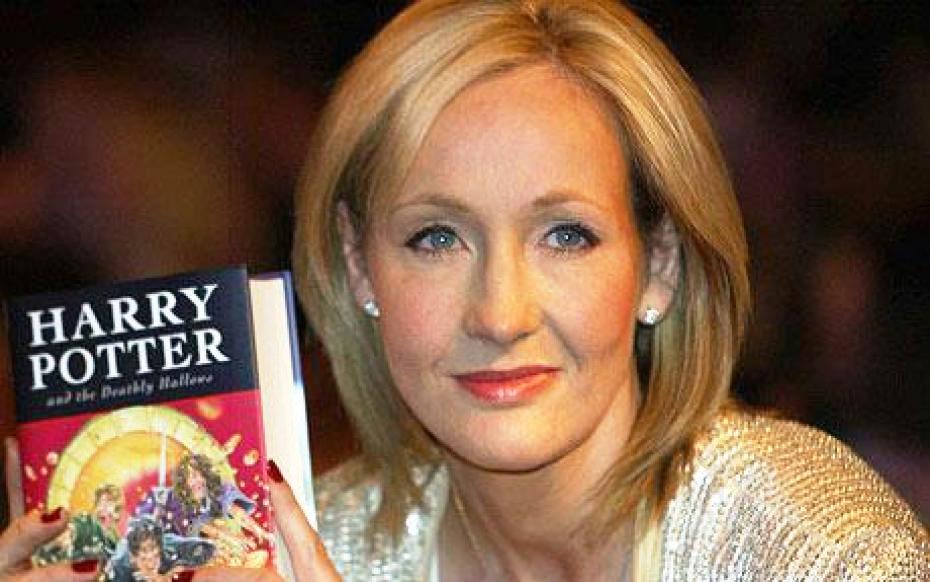
JK Rowling

I recently concluded that reading Young Adult dystopian isn’t for me.

Admittedly, having just celebrated my 35th birthday, it’s hardly a revelation that I’m the genre’s target audience.

However, my conclusion came even less recently than that; it happened about a month ago when I finished my sixth YA dystopian title this year after Suzanne Collins’s Mockingjay, Beth Revis’s Across the Universe trilogy, and Samantha Shannon’s The Bone Season:

The uber-popular Divergent, by Veronica Roth (soon to be a movie in 2014).

In this book, all 16-year-olds – the main character, Tris, included – undergo often violent and competitive initiations in order to be inducted into one of four societal factions that go on the govern the rest of their lives (full plot summary here).

Continue reading

On Suspense in Storytelling, pt. 2 – Unpredictable-Unputdownable

Every story, by definition, contains suspense in one form or another.

The most common form is the Predictable-Yet-Still-Desirable (from pt. 1), wherein the reader/viewer already has a pretty good idea of what’s going to happen before it happens, but wants to see it anyway.

This may be either to feel the satisfaction of having been correct in his/her predictions, to see exactly how it happens, or to be already emotionally prepared to vicariously undergo a universal human experience.

Somewhat less common is a second form of suspense, which, ironically, is probably the form that more readily comes to mind when one hears the word “suspense”: the unpredictable-and-thus-unputdownable, which keeps the reader glued to the book, and still reading long after s/he should have gone to bed.

All stories by their very nature contain the precursors of this type of suspense.  How could they not?  Stories come to us described by blurbs designed to hint at the plot and its major turning points, but ultimately give nothing away.

They’re the very definition of suspense, for who knows what might happen between the lines of that enticing paragraph on the back of the book or DVD case?

Not all stories, however, retain that suspense.

Continue reading

On Military Fiction and Other Stories About War – A Remembrance Day-inspired reflection

Remembrance Day

When I was younger – perhaps being around 13 or 14 years old – I developed a fondness for military fiction.

I’m not entirely sure why this was.  Even though my father spent 30+ years in the military before retiring, his preferred genres at the time were westerns and historical fiction, so I wasn’t influenced by his reading preferences.

Nor nor was I by his specific profession, for he served in the Navy, yet I was reading primarily about the activities of the Army.

I remember picking up a novel about the Vietnam War at the library.  It had an eye-catching cover, and once I started reading, it wasn’t long before I was utterly absorbed.

Continue reading

The iPad Mini (Finally!) Made an E-Reader Out of Me

I was doing my first ever beta read for a friend when realized I could do with a digital reading device.

My friend had written her memoir, which she’d sent to me as a PDF.  249 pages.

Reading is meant to be a form of relaxation for me, wherein I recline on my bed or couch and take a load off.  However, in order to do so with my friend’s book, I would either have to,

  1. Pay to have printed
  2. Secretly print it out at work and hope no one noticed, or else
  3. Read at my dining table while hunched over my laptop.

Because I’m both cheap and honest, option C was what I did for about 85% of the book.  Right up until my team at work became the proud owners of a few iPads, which we were allowed to take home to familiarize ourselves with their operation.

This was just the sort of trial I like.  Prior to this, I’d visited various electronic stores to look at tablets, only to have commission-hungry sales reps swooping in for the kill before I’d had even two minutes to try out some of the different features I’d use a tablet for.

But this way, I was getting to test-drive the device at my own speed, and in my own space.

I surprised myself with how readily I took to reading a book on a tablet.

Continue reading

On Suspense in Storytelling, pt. 1 – The Predictable-Yet-Still-Desirable

Suspense, as a concept, is something I’m pretty sure all writers comprehend.

Suspense (/səˈspɛns/):

Noun

“A state or feeling of excited or anxious uncertainty about what may happen.” (Source: Google.)

After all, most writers begin their journey as a reader, and most readers love the thrill of a story unfolding – of experiencing every reversal and triumph that befall the characters as the plot moves along its way toward an as-yet unforeseen conclusion.

True, some readers do read the very last page of the book first – perhaps to ensure the story will have a happy ending.  However a last page really doesn’t convey much when taken out of context of all that comes before it, so even such a reader will be forced to weather the ebbs and flows of a storyline in the sequence in which they occur.

As a reader myself, however, it occurred to me recently that there are actually two types of suspense in storytelling.  Taken in turn, each type produces the following reaction in my head:

Continue reading

Do You Like Stories With Changing Viewpoint Characters?

Yes or no?

Me: I actually kind of hate it.

And unlike stories told in present tense, which I also don’t like but am willing to tolerate, I’ve definitely been known to pass over books written from multiple points of view, particularly those with the proverbial “cast of thousands” in which every character has their say

Case in point: everything after A Game of Thrones in George R.R. Martin’s Song of Ice and Fire series.

(Changing viewpoint characters isn’t the only reason I bailed on the series: Martin also has the unfortunate habit of killing off main characters with homicidal regularity.  Which, it could be argued, is a further manifestation of the books’ revolving door of POVs.)

It may well be that the reason I’m not reading so many books with multiple viewpoint characters anymore is because I’ve largely given up on the genre where it’s a near-ubiquitous storytelling element: epic fantasy.

Multiple viewpoints are found in other genres as well: pretty much every genre I’ve ever read in my life (which is to say, every genre) has its contenders.  Indeed, multiple POVs is probably the more common way the tell a story as compared to a single viewpoint character.

But that single, narrating character is my preference both in reading and in writing, for two main reasons:

Continue reading

Do You Like Stories Told in Present Tense?

Yes or no?

Personally: no.

Not even a little, really.

This isn’t to say I won’t read a book if it’s narrated in present tense.  Indeed, I’ve never purposely avoided reading one for that reason, and two of my favourite YA series – Libba Bray’s Gemma Doyle trilogy and Beth Revis’s Across the Universe trilogy – are written in present tense.

But it’s definitely not my favourite style or writing.  I definitely need to brace myself before diving into a story told in this way.  I certainly have no plans to write my own present tense story anytime soon.

Continue reading

Do You Like First-Person Narration?

Yes or no?

Personally: yes.

And no.

Well, which is it?

This isn’t an attempt to be non-committal in my answer.  Rather, I find there are certain circumstances where I love it and all the intimacy and insight it offers into the narrator’s character, and other times where it leaves me cold.

It goes without saying that stories in first-person are told by I – from the point of view of the narrator (who is typically also the protagonist), and likewise told in the narrator’s voice.  As a style of telling a story, it can be found in any genre, but is particularly common in YA, chick lit, memoir, and occasionally historical and romance.

It’s popularity among those who like it seems to be due to the extreme closeness it allows to develop between narrator and reader.

Such ready access to the narrator’s thoughts and observations can be incredibly instructive to the reader in understanding what this person is all about.  So instructive, in fact, that the reader may come to feel like s/he is the narrator, vicariously living every joy and pain that befalls the narrator as his/her their own.  The constant appearance of the word “I” – of the reader hearing it echo over and over within his/her thoughts – can further contribute to this.

What I described above is not the case for me, though.

Continue reading