How to Write a Sex Scene

That got your attention, didn’t it?

(A/N: For the purposes of this post, I am defining a sex scene as one in which sexual activity is explicitly described, rather than those of the fade-to-black, implied sex variety.)

I was too scared to type the words “sex scene” into a Google Image search, afraid it’d result in a reaction similar to this.

Sex scenes are among the most difficult scenes to write.  Part of this is because doing so in one way or the other reveals to the world what you find sexually appealing, either through what happens in a sexy sex scene or what doesn’t happen in an intentionally unsexy one.

In North American culture, sharing your sexual turn-ons with people you haven’t even met (in this case, readers) isn’t something people tend to do, at least not using their real name or one by which they can otherwise be traced.

Furthermore, sex scenes have a far greater potential than other types of scenes to read as unintentionally humourous, repulsive, or cringe-worthy embarrassing.  Not to mention they require some pretty exact choreography.

Continue reading

Me, Myself & iPhone

Is your smartphone usage stifling your creativity?

In the spirit of full disclosure, I’ll admit right here that I’m a reluctant import into the world of Web 2.0 – not exactly a Luddite, but no early adopter either, not since Gmail first launched and you needed to be invited by an existing user to join.

I’m not on Facebook, I’m terrible at texting, the predominant activity I perform with my phone is talking on it, and I don’t own a smartphone (or rather, don’t own the corresponding data plan required to boost my phone’s intelligence quotient) because

a)  I don’t want to pay for it, and

b)  I couldn’t conceivably fit any more computing time into my day

Continue reading

The Gift of Boredom

The Fourth Rule of Engagement

We’ve all been there.

It doesn’t matter if you’re writing an essay for school, a “Dear John” letter to your soon-to-be ex-boyfriend/girlfriend/husband/wife/roommate from Hell, a letter of resignation, a last will and testament, or a manuscript that will someday outsell Harry Potter, Twilight, The Hunger Games, Fifty Shades of Grey, and the Bible combined.

At some point in the writing process, you find yourself a little bit stuck and unsure of what to write next.  You find that you need a bit of a break – just a short one – to give your brain a chance to catch its breath from all the mental calisthenics it’s been performing.  And so you click open your web browser, intent on just a quick peek at what’s been happening on the Web while you were busy spinning words into gold.

And then…

And then….

Continue reading

…But Fear Itself

Why do so many people who want to write – people who love writing, love words, love stories, and claim writing is their passion –  not actually do so?

I found myself pondering this question this week while running on the treadmill at the gym, and came to the conclusion that writing and physical exercise have much in common.

I made a similar comparison in my very first post on this blog, when I wrote that my creative muscles were out of shape, and that a mere 126 new words had strained them near to the breaking point.  But now I’m making a literal comparison.  Exercise is another thing that many people want to do – that everyone intuitively knows they should do – yet not everyone does.

I know why.  It’s not because of laziness.  With writing or with exercise.

Continue reading

Building a History – finale: Pages From Your Personal History

All fiction writing is historical fiction, even when it’s not….

Over the course of trying to learn how to be an effective writer, I’ve read numerous books, articles, and blog posts on all things to do with writing.

I continue to read blogs on writing to this day.  The majority of my study of nuts-and-bolts writing craft, however, occurred between the pages of this or the other book, and between 2001 and 2004, when I was first starting to take myself and my desire to produce publishable material seriously.

The years that followed afforded me numerous opportunities to really think about, internalize, and practice the various techniques I’d read about in the past.

They also caused me to often forget which books yielded which specific writing tips and ideas about the writing life.

One notion in particular for which I clearly remember the content yet not the source is the idea that whatever novel you’re currently working on is, in truth, the novel of your past.

Continue reading

“Leave Out All the Rest” (or, How Linkin Park reminded me that readers often read different things into writing than writers actually wrote)

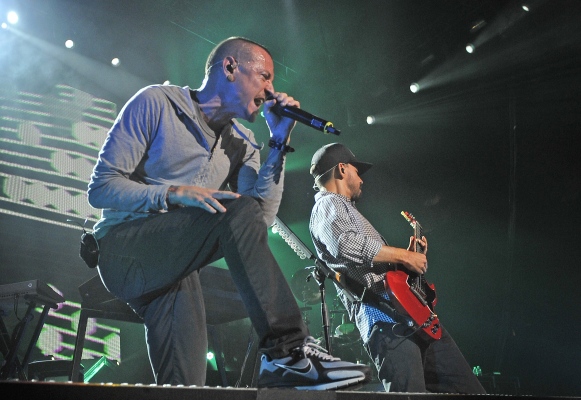
So, finally, this week, the long-awaited Linkin Park concert occurred in Vancouver.

I’ll answer two questions right off the bat: 1) Yes, it was awesome, and 2) no, it won’t be the last concert I ever go to.

I was quite surprised, however, by the set list the band selected to play.  Not because they played songs I didn’t know or like (I know and like almost all of Linkin Park’s songs, so that’s never a concern).  Rather, it was because their set all at once caused me to perceive the band in a different way than I’d previously done all the years I’ve been a fan, since 2000.

Which, in turn, recalled me to the fact that what a music-lover/reader/viewer takes away from a song/novel/movie/TV show/etc. might be wildly different from the intended message of the artist that produced it.

At times, I was quite stridently reminded of this fact.

Continue reading

On the Edge of Something Wonderful

I make a point of recording certain milestones while at work on my novel-in-progress.

I do so to track when I reach certain parts of the novel, both to measure the consistency of my output and for reminiscence.  I also do it to encourage further progress and the achievement of additional milestones.

The specific milestones I’ve chosen to observe are as follows:

  • Page 50 of the novel
  • Page 100 of the novel
  • Every page that is a multiple of 100
  • The approximate midpoint of the novel
  • The end of every chapter

Currently in my novel, I’m about five words away from rolling over onto page 100.  I’m also about half a page away from the end of a chapter.  One might suppose I’m feverishly working away on achieving two milestones within such a short space of each other.

But I’m not.

Instead, I’m rather preoccupied with another pursuit.

Once I finish with this one, I’ll gladly return to writing.  In the meantime, though, I find myself on the edge of something else that’s wonderful.

——————–

Related post: No Better Place (for Writing)

Building a History – Redux: Where the Streets Have No Name

(A/N: Post title is a play on the song Building a Mystery by Sarah McLachlan and taken from the song Where the Streets Have No Name by U2.)

I am a victim of my own writing predilections, and also a beneficiary of them.

I write historical fiction, but at my core, I treasure the freedom to make and break the rules of the factual and natural world offered by the fantasy genre.

I love learning and writing about how people lived in the distant past, but am less intrigued by stories of real personages out of history, who tend to from the upper classes of society, and instead prefer the historical equivalents to people more like myself.

I’m dedicated to creating a strong sense of place for the reader, for whom distant past settings are likely very alien and divergent from modern life and sensibilities.  Yet not even historians know for 100% certain what in the past was like, thus reference books, Google Maps, and even visiting specific locations in their present-day incarnations can only offer so much insight.

These three writing preferences converge upon a common point, that being the point where there is a gap in recorded history.

I experienced such a gap in my novel-in-progress: in one of the English towns where much of the story takes place, there is no recorded history that I’ve been able to find between the years of 1086 and 1316.  There isn’t conclusive evidence that a castle existed there, but I’ve gone and created one all the same, designing and describing its layout and lifestyle to suit the needs of my story’s plot.

As I mentioned in a previous post within this series, historical fiction and fantasy share a need for detailed world-building, yet differ in that with historical fiction, you have to look all those details up whereas in fantasy, you have to make them all up.

Well, when it comes to places and situations for which there is little recorded history, the historical fiction writer gets to make up stuff as well, thus revealing another meaning to the title of this post series: building a history.

But just how much history does one need to build?

Continue reading

Don’t forget you can make a telephone call with your mobile!

A rare, mid-week post from me. I have contributed to the blog 5 Things to Do Today, which is a blog that encourages us to break out of our mold and try new things (five of them, everyday). Check it out.

Unknown's avatar

A rare, mid-week post from me. I have contributed to the blog 5 Things to Do Today, which is a blog that encourages us to break out of our mold and try new things (five of them, everyday). Check it out.

View original post

Making a Write Turn (of Phrase)

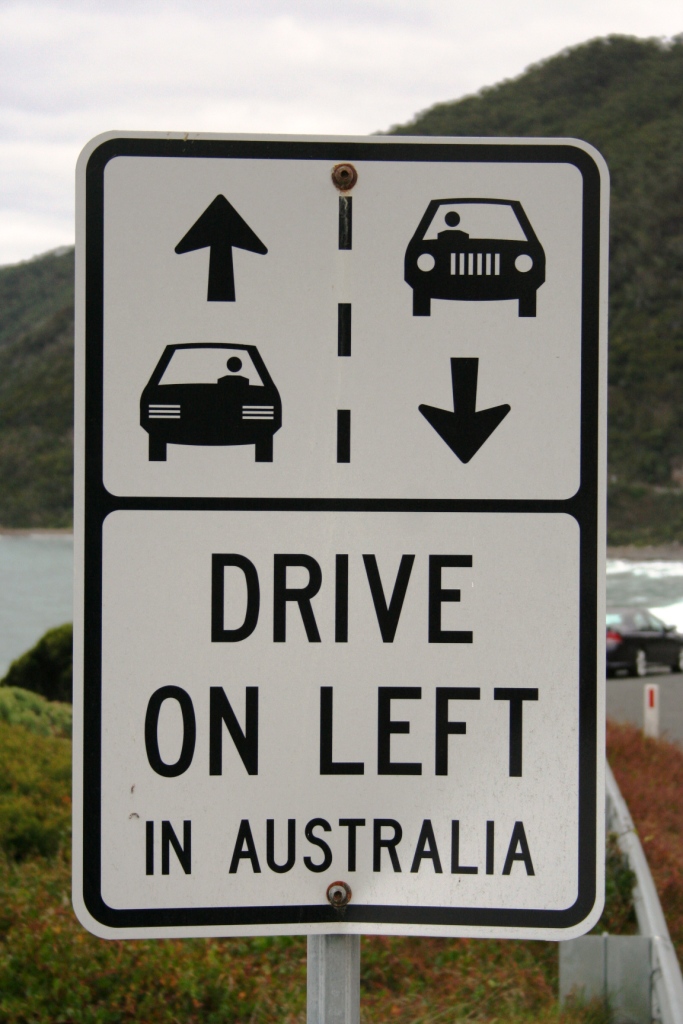
I have a good friend from Australia.

(I swear, this isn’t the start of a limerick.)

My Aussie friend – let’s call her NR – became a friend having been my roommate here in Vancouver for almost two years.  During those years, we spend a tremendous amount of time together, talking about everything under the sun, singing songs, making jokes, arguing, and telling each other how much we love each other.

Needless to say, I’ve come to know her Aussie accent really well.

I’ve already confessed in a previous post to having a penchant for trying to mimic accents and foreign turns of phrase.  Indeed, NR says that having me around is sometimes like an annoying little echo aping her alternate pronunciations –

  • “AH-mund” (“almond”)
  • “ah-loo-MIN-nium” (“aluminium”)
  • “MAS-sage” (“massage” made to sound really kinky)
  • “Douglas FAAH” (“Douglas Fir” – one of the most common tree types found along the coast of British Columbia)

– not to mention her non-North American expressions, such as “reckon” (to perceive or imagine something), “crook” (ill or unwell), “capsicum” (a bell pepper), and my personal favourite, “rear-vision mirror” (the rear-view mirror in a car, which, when spoken in the typical Aussie cadence actually comes out sounding more like “revision mirror”.)

This is all fun and games for me, and NR as well I’m fairly certain, for it’s practically a national pastime among the Australians to “take the piss out of” (tease or make fun of) friends and likewise be a good sport when others take the piss out of you.

However, beyond mere amusement, my interactions with NR have led to think a lot about dialects in general, and how that effects my writing.  For not only do numerous ones tend to exist within a given language, these dialects also vary across time as well geographical space.

In other words, how do I create effective historical dialogue?

Continue reading