On Military Fiction and Other Stories About War – A Remembrance Day-inspired reflection

Remembrance Day

When I was younger – perhaps being around 13 or 14 years old – I developed a fondness for military fiction.

I’m not entirely sure why this was.  Even though my father spent 30+ years in the military before retiring, his preferred genres at the time were westerns and historical fiction, so I wasn’t influenced by his reading preferences.

Nor nor was I by his specific profession, for he served in the Navy, yet I was reading primarily about the activities of the Army.

I remember picking up a novel about the Vietnam War at the library.  It had an eye-catching cover, and once I started reading, it wasn’t long before I was utterly absorbed.

Continue reading

The iPad Mini (Finally!) Made an E-Reader Out of Me

I was doing my first ever beta read for a friend when realized I could do with a digital reading device.

My friend had written her memoir, which she’d sent to me as a PDF.  249 pages.

Reading is meant to be a form of relaxation for me, wherein I recline on my bed or couch and take a load off.  However, in order to do so with my friend’s book, I would either have to,

  1. Pay to have printed
  2. Secretly print it out at work and hope no one noticed, or else
  3. Read at my dining table while hunched over my laptop.

Because I’m both cheap and honest, option C was what I did for about 85% of the book.  Right up until my team at work became the proud owners of a few iPads, which we were allowed to take home to familiarize ourselves with their operation.

This was just the sort of trial I like.  Prior to this, I’d visited various electronic stores to look at tablets, only to have commission-hungry sales reps swooping in for the kill before I’d had even two minutes to try out some of the different features I’d use a tablet for.

But this way, I was getting to test-drive the device at my own speed, and in my own space.

I surprised myself with how readily I took to reading a book on a tablet.

Continue reading

On Suspense in Storytelling, pt. 1 – The Predictable-Yet-Still-Desirable

Suspense, as a concept, is something I’m pretty sure all writers comprehend.

Suspense (/səˈspɛns/):

Noun

“A state or feeling of excited or anxious uncertainty about what may happen.” (Source: Google.)

After all, most writers begin their journey as a reader, and most readers love the thrill of a story unfolding – of experiencing every reversal and triumph that befall the characters as the plot moves along its way toward an as-yet unforeseen conclusion.

True, some readers do read the very last page of the book first – perhaps to ensure the story will have a happy ending.  However a last page really doesn’t convey much when taken out of context of all that comes before it, so even such a reader will be forced to weather the ebbs and flows of a storyline in the sequence in which they occur.

As a reader myself, however, it occurred to me recently that there are actually two types of suspense in storytelling.  Taken in turn, each type produces the following reaction in my head:

Continue reading

Do You Like Stories With Changing Viewpoint Characters?

Yes or no?

Me: I actually kind of hate it.

And unlike stories told in present tense, which I also don’t like but am willing to tolerate, I’ve definitely been known to pass over books written from multiple points of view, particularly those with the proverbial “cast of thousands” in which every character has their say

Case in point: everything after A Game of Thrones in George R.R. Martin’s Song of Ice and Fire series.

(Changing viewpoint characters isn’t the only reason I bailed on the series: Martin also has the unfortunate habit of killing off main characters with homicidal regularity.  Which, it could be argued, is a further manifestation of the books’ revolving door of POVs.)

It may well be that the reason I’m not reading so many books with multiple viewpoint characters anymore is because I’ve largely given up on the genre where it’s a near-ubiquitous storytelling element: epic fantasy.

Multiple viewpoints are found in other genres as well: pretty much every genre I’ve ever read in my life (which is to say, every genre) has its contenders.  Indeed, multiple POVs is probably the more common way the tell a story as compared to a single viewpoint character.

But that single, narrating character is my preference both in reading and in writing, for two main reasons:

Continue reading

Do You Like Stories Told in Present Tense?

Yes or no?

Personally: no.

Not even a little, really.

This isn’t to say I won’t read a book if it’s narrated in present tense.  Indeed, I’ve never purposely avoided reading one for that reason, and two of my favourite YA series – Libba Bray’s Gemma Doyle trilogy and Beth Revis’s Across the Universe trilogy – are written in present tense.

But it’s definitely not my favourite style or writing.  I definitely need to brace myself before diving into a story told in this way.  I certainly have no plans to write my own present tense story anytime soon.

Continue reading

Do You Like First-Person Narration?

Yes or no?

Personally: yes.

And no.

Well, which is it?

This isn’t an attempt to be non-committal in my answer.  Rather, I find there are certain circumstances where I love it and all the intimacy and insight it offers into the narrator’s character, and other times where it leaves me cold.

It goes without saying that stories in first-person are told by I – from the point of view of the narrator (who is typically also the protagonist), and likewise told in the narrator’s voice.  As a style of telling a story, it can be found in any genre, but is particularly common in YA, chick lit, memoir, and occasionally historical and romance.

It’s popularity among those who like it seems to be due to the extreme closeness it allows to develop between narrator and reader.

Such ready access to the narrator’s thoughts and observations can be incredibly instructive to the reader in understanding what this person is all about.  So instructive, in fact, that the reader may come to feel like s/he is the narrator, vicariously living every joy and pain that befalls the narrator as his/her their own.  The constant appearance of the word “I” – of the reader hearing it echo over and over within his/her thoughts – can further contribute to this.

What I described above is not the case for me, though.

Continue reading

Adventures in Reading: A Monumental Achievement or, When Bad Characters Do Worse

As someone hard at work writing a historical fiction novel, I’ve read a startlingly large number of research books.

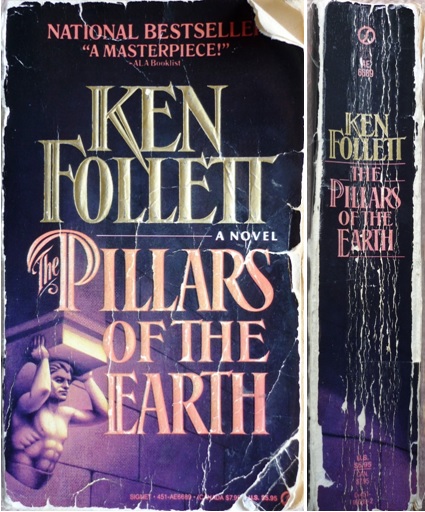
Cover and spine of my worse-for-wear copy of The Pillars of the Earth. Over the course of reading, it eventually became a contest to see which would occur first: me reaching the end or the back cover falling off. The cover won.

Not all of them have been nonfiction.

I suspect that conducting research via fiction is something numerous writers do, and not just those writing historicals.

I’m sure almost every writer has consciously studied existing novels to see how others have handled any number of elements of writing craft, from as broad as character development to as concrete as the number of pages per chapter.

So it was, therefore, that I came to Ken Follett’s The Pillars of the Earth.  Reading this book fell under the purview of “research” for three reasons:

  1. I wanted to study the pacing of such a lengthy (973 pages) novel since my own WIP, though in two novels, will also be a long-ish tale
  2. I wanted to study Follett’s presentation and accuracy of historical details (for all that Pillars takes place about three-quarters of a century earlier than my WIP)
  3. I wanted to read the book before watching the Pillars of the Earth miniseries so I could critique the fidelity of the adaptation in preparation for when my WIP is someday turned into a film.

Cue delusion.

Although, it could happen.  Anything could happen.

I digress.

Continue reading

Adventures in Reading: New Planets and the New Adult Genre

(A/N: Mild spoilers for Beth Revis’s Across the Universe series)

Here’s a scenario for you:

Imagine you had the opportunity to help colonize a new planet located hundreds of light-years away.  This would involve saying goodbye forever to everyone and everything you know and love on Earth, being cryogenically frozen for centuries, and shipped off into the stars.

Would you go?*

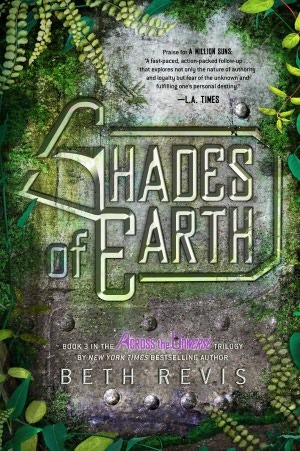
This question is brought to you by a dystopian young adult sci-fi series dealing with this very subject: Beth Revis’s Across the Universe trilogy.  This trilogy includes Across the Universe, A Million Suns, and the final book of the series – Shades of Earth – which I read back in February.

Continue reading

Adventures in Reading: A tale of two tyrants – part 2

Continued from part 1

Tyrant #2: King John of England, 1167 (b) – 1216 (d)
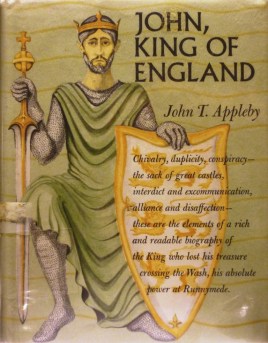
More people are familiar with King John of England than probably realize.

This is not so much due to his own merits, but rather his frequent association with another, better-known individual from history:

Robin Hood.

(King John, just so you know, was a real historical personage.  Robin Hood, meanwhile – not so much.)

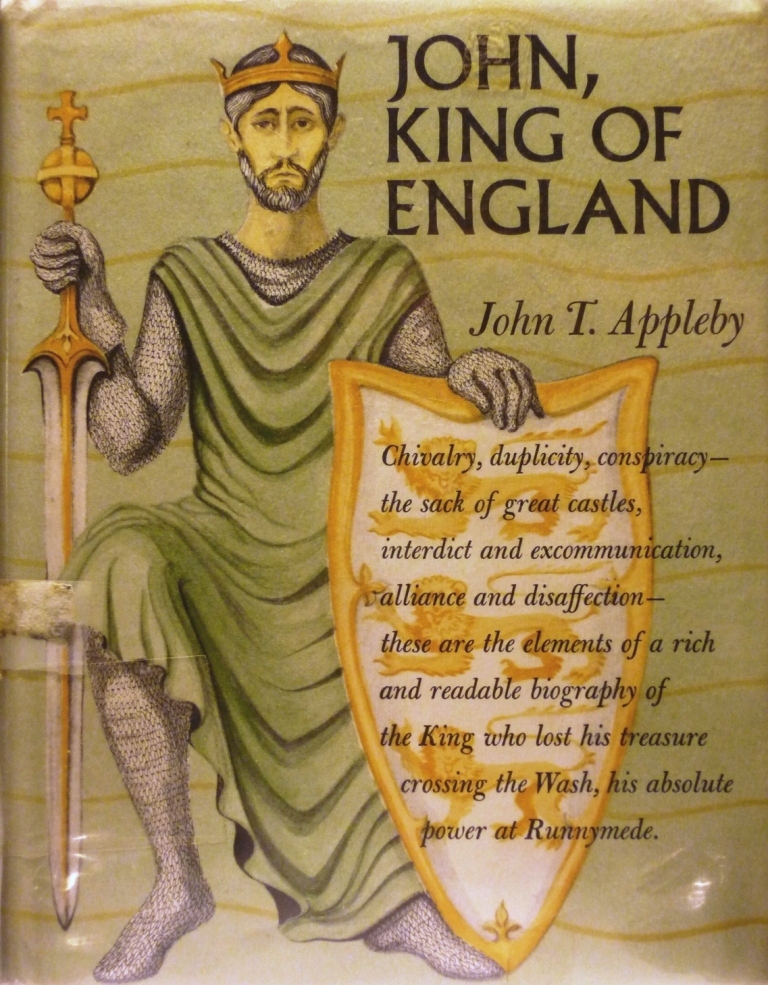
My second half-book for 2013 – John, King of England by John T. Appleby – was an adventure to read because it was a reference book for my novel-in-progress that I had to continue if I wanted the “in progress” bit to remain true.

Yet is was also so dense with historical information, it took forever for me to get through it.  No word of lie, I renewed this book from the library four times for three weeks at a time.

It was also the book that quite decisively taught me how not to go about writing a work of historical fiction, such as I currently am.  But that’s the topic of a whoooole other blog post.

Despite how long it took to read John, King of England, it was very enjoyable.  It was written in a dry, witty style typically attributed to British humour.  For a long time, I assumed the author, John T. Appleby (who died in 1974), was British, only to discover that he was born in Fayetteville, Arkansas, was a Harvard graduate, and at the time of the book’s publication (1959) lived in Washington, D.C.

In the book, I learned about King John’s many failings that made him such a suitable distant villain in the Robin Hood lore.  A small selection:

Continue reading

Adventures in Reading: A tale of two tyrants (in two parts)

PART 1

As previously mentioned, one of my New Year’s Resolutions for 2013 is to read 12 books.

Twelve books in 2013 is a book a month(ish), and once the New Year hit, the countdown was on.

The problem was, on January 1, I was midway through a research book for my novel that I had to finish to continue writing.  Yet, this title couldn’t count as book #1 since I was, indeed, already halfway through it.

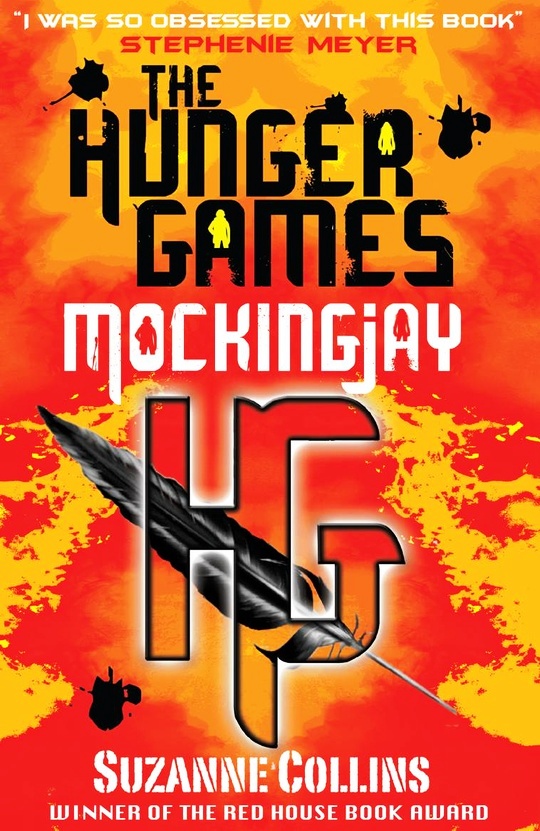
To compromise, I took another book I was also halfway through and counted the two halves as one.  And as it happened, the two books – John, King of England by John T. Appleby and Mockingjay by Suzanne Collins – both dealt with the subject of tyrants and people’s responses to their actions.

Continue reading