Not the Girls We Think They Are: On unattractive female characters in fiction

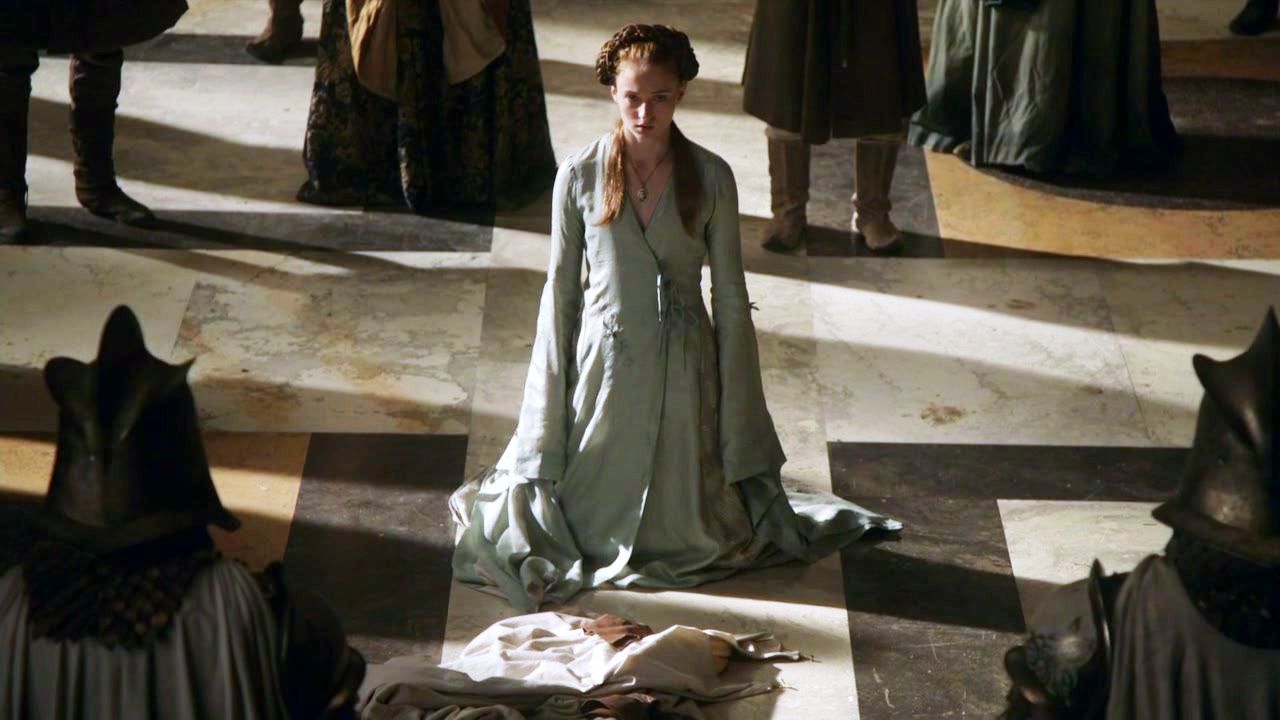
Jane Eyre (2011)

Jane Eyre (2011)

“She isn’t ugly enough.”

This was my friend’s comment on the actress playing Tris Prior in the movie Divergent as we stood in line to buy tickets.

“She wouldn’t be my type if I were into girls,” I replied, thinking I’d missed the punch line of a joke and trying to compensate with humour of my own.

“No,” my friend insisted.  “People are complaining about the actress being too pretty because in the book Tris is supposed to be ugly.  Remember?”

We’d both read the book.  My friend enjoyed it more than I did, and as a result seemed to remember certain details better than me as well.

But now that she mentioned it, I did recall something about Tris considering herself unattractive, or in the very least, plain, and that she was sure her male crush would dislike her because of it.

Continue reading

“For Diversity’s Sake”: On Representation in Fiction, One’s True Art & the Vicious Circle of Mainstream Media

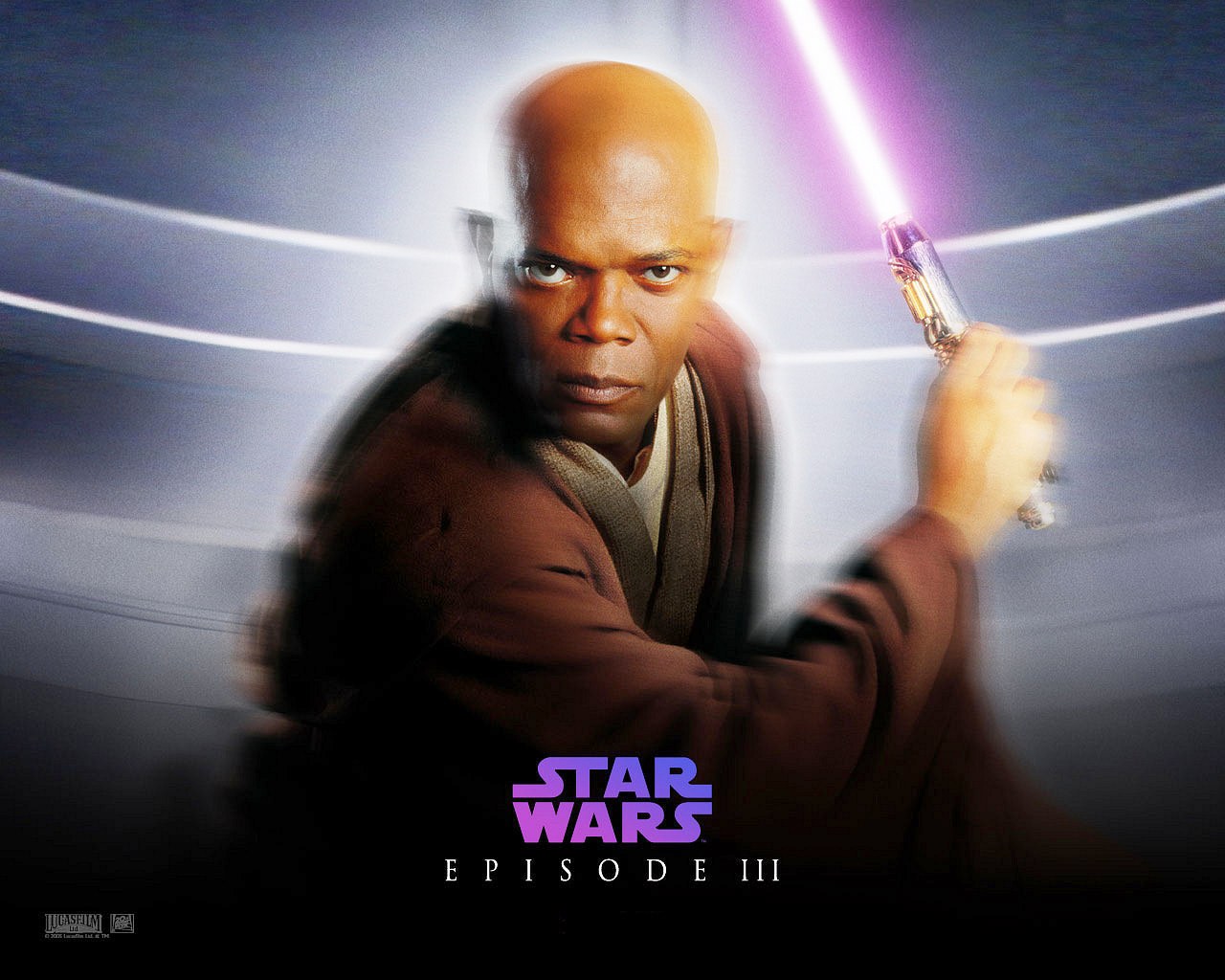
Samuel L. Jackson as Mace Windu, the first black Jedi.

Samuel L. Jackson as Mace Windu, the first black Jedi.

There’s been a lot of talk lately within the corners of the blogosphere I frequent about diversity of characters in genre fiction.

First fantasy author Chuck Wendig blogged in favour of book and movie characters being more representative of the world around us.

Then, indie fantasy author Ksenia Anske wrote about writers – diverse writers included –writing their true art – whatever shape or colour that may be – rather than being obliged to meet quotas of diversity – a compelling piece I neither fully agree nor disagree with.

This topic is hardly new within the writing world, with numerous other arguments out there both for and against the inclusion of more people of colour, of different sexual and gender orientations, and different physical and mental ability levels in genre fiction.

The “against” argument I despise the most is the concept of something I repeatedly saw in the comments trail of Chuck Wendig’s post.

The notion of “diversity for diversity’s sake”.

Continue reading

Pink Stinks: On Colour-Coding, Bike Saddles & Gendered Consumer Targets

Pink toy aisle

Back in the medieval times, blue was considered a colour for girls.

This is due to the shawl of the Virgin Mary having been that colour.  Blue was considered to denote the womanly virtues of obedience, penitence, devotion, and grace.

Pink, meanwhile, in belonging to the red family, was viewed a colour most appropriate for boys, presumably due to the redness of all the blood they’d be spilling as future knights and fighting men.

I mention this not to argue that pink isn’t truly as feminine a colour as it’s portrayed present-day, but rather to demonstrate that the practice of colour-coding by gender is by no means a modern phenomenon.

Although perhaps the opposition some feel towards it is.

Continue reading

Should Authors Be Good Role Models?

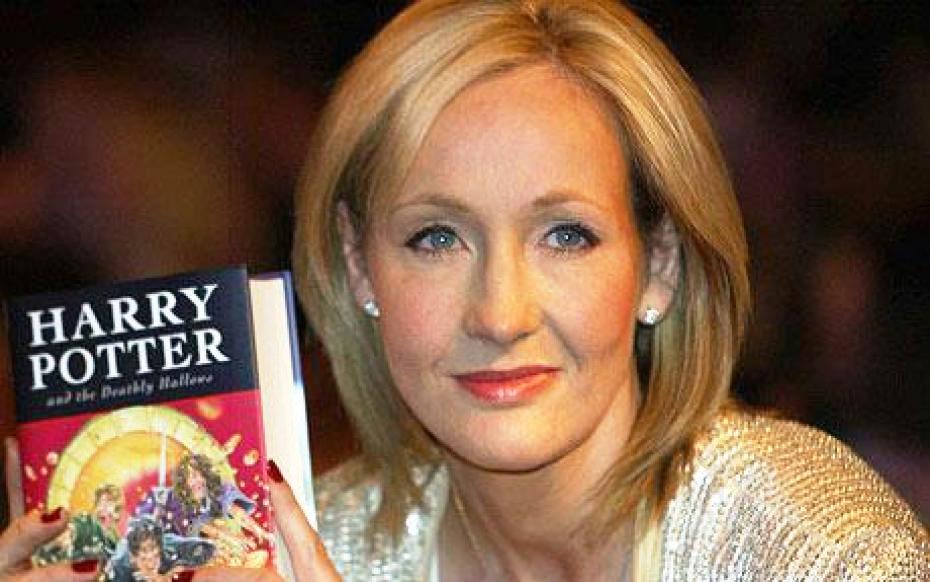
JK Rowling

I recently concluded that reading Young Adult dystopian isn’t for me.

Admittedly, having just celebrated my 35th birthday, it’s hardly a revelation that I’m the genre’s target audience.

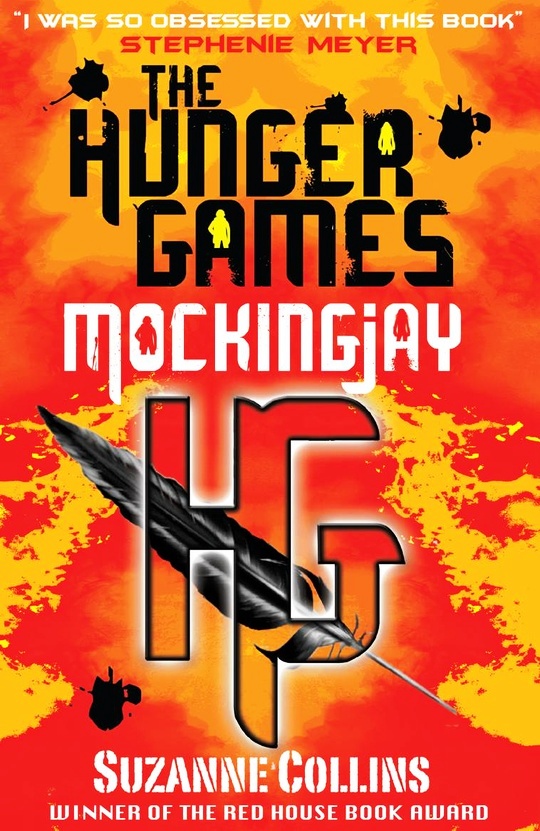
However, my conclusion came even less recently than that; it happened about a month ago when I finished my sixth YA dystopian title this year after Suzanne Collins’s Mockingjay, Beth Revis’s Across the Universe trilogy, and Samantha Shannon’s The Bone Season:

The uber-popular Divergent, by Veronica Roth (soon to be a movie in 2014).

In this book, all 16-year-olds – the main character, Tris, included – undergo often violent and competitive initiations in order to be inducted into one of four societal factions that go on the govern the rest of their lives (full plot summary here).

Continue reading

Who’s Gonna Read Your Book: On gender, readers, and the (gendered) state of entertainment

I have no idea whose going to want to read my book.

Don’t get me wrong, I know of several individuals who claim they’re anxiously awaiting the momentous day that I deliver unto them a copy of my novel-in-progress’s final draft:

  • Friends who have had to listen to my talk about my opus for far too long
  • Coworkers
  • Former coworkers
  • Select family members

(My mother, at this point, is only a “maybe”, but I’m fairly confident I’ll be able to either strong-arm or guilt-trip her into the task.)

But in terms of actual readers who are neither emotionally nor relationally obligated to me, I’m not really sure.

Particularly when it comes to actual male readers.

Continue reading

Strong Female Characters Who Fight Silent Wars

When I was in grade 5 or 6, I read a young adult fantasy novel entitled The Woman Who Rides Like a Man.

This book was the third of a quartet by the wonderful Tamora Pierce about a girl named Alanna who disguises herself as a boy in order to enter training to eventually become a knight of her kingdom.

I loved this book – loved the entire series – and from that moment, a obsession with female fantasy characters who could fight was born.  I couldn’t get enough of stories where women wielded swords, shot bows, fought empty-handed in any sort of martial art, worked as mercenaries, commanded soldiers, and never had to fear for their safety or worry about being disrespected, for they knew how to put jerks in their place.

Stories featuring – as they’re often portrayed within the genres of fantasy and sci-fi – strong female characters.

Continue reading

Adventures in Reading: New Planets and the New Adult Genre

(A/N: Mild spoilers for Beth Revis’s Across the Universe series)

Here’s a scenario for you:

Imagine you had the opportunity to help colonize a new planet located hundreds of light-years away.  This would involve saying goodbye forever to everyone and everything you know and love on Earth, being cryogenically frozen for centuries, and shipped off into the stars.

Would you go?*

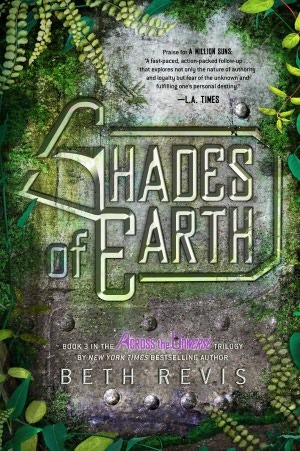
This question is brought to you by a dystopian young adult sci-fi series dealing with this very subject: Beth Revis’s Across the Universe trilogy.  This trilogy includes Across the Universe, A Million Suns, and the final book of the series – Shades of Earth – which I read back in February.

Continue reading

On Validation, and why it’s okay for writers to want it

"I've wanted more than anything to have your respect....  And I can't deny the fact that you like me, right now, you like me!" (from actress Sally Field's 1985 Academy Award acceptance speech)

“I’ve wanted more than anything to have your respect…. And I can’t deny the fact that you like me, right now, you like me!” (from actress Sally Field’s 1985 Academy Award acceptance speech).


This issue of validation keeps coming up within the traditional vs. self-publishing debate.

For some time now, I’ve been reading various blog posts and articles discussing the merits of one form of publishing compared to the other, particularly as related to the aspirations of unpublished writers.

This debate is nothing new – indeed, it’s been going for so long now as to be almost institutionalized, complete with its own special vocabulary: “gatekeepers”, “credibility”, “the gauntlet”, “vetting process”, “the old guard”, “the new order”, “the publishing revolution”, “the Big 6, 5, 4, etc.”

However, over the past two weeks, a new vocabulary word has appeared on the scene, predominantly in disparaging reference to writers seeking a deal with a traditional publisher:

Validation.

Or better put: the desire for acceptance by and praise from the agents and editors of traditional publishing as opposed to the potentially greater monetary rewards of self-publishing.

Continue reading

Adventures in Reading: A tale of two tyrants (in two parts)

PART 1

As previously mentioned, one of my New Year’s Resolutions for 2013 is to read 12 books.

Twelve books in 2013 is a book a month(ish), and once the New Year hit, the countdown was on.

The problem was, on January 1, I was midway through a research book for my novel that I had to finish to continue writing.  Yet, this title couldn’t count as book #1 since I was, indeed, already halfway through it.

To compromise, I took another book I was also halfway through and counted the two halves as one.  And as it happened, the two books – John, King of England by John T. Appleby and Mockingjay by Suzanne Collins – both dealt with the subject of tyrants and people’s responses to their actions.

Continue reading

Don’t forget you can make a telephone call with your mobile!

A rare, mid-week post from me. I have contributed to the blog 5 Things to Do Today, which is a blog that encourages us to break out of our mold and try new things (five of them, everyday). Check it out.

Unknown's avatar

A rare, mid-week post from me. I have contributed to the blog 5 Things to Do Today, which is a blog that encourages us to break out of our mold and try new things (five of them, everyday). Check it out.

View original post