Write a Novel to Change People, to Change Yourself and the World, for the Better

(A/N: This post is in honour of the victims, the emergency staff, and those in mourning in Boston)
I was on the treadmill, running, as the devastating events surrounding the Boston Marathon were unfolding.

Because of the time difference between Boston and Vancouver, BC, it was my lunch hour, which, as usual, saw me in the gym located beneath my office.

I was enjoying my run that day, which is by no means a guaranteed occurrence.  Afterward, to commemorate, I took to Twitter to convey my delight in how just the right song coming up on one’s iTunes shuffle at just the right time (such as during the final five-minute sprint) can transform an otherwise good run into one that’s AWESOME and KICKASS and makes you feel able to CONQUER THE WORLD!

It was then that I took a closer look at the content of all those #Boston tweets filling my Twitter stream….
Continue reading

Line By Line, Stone By (Mile)Stone

This past week, I reached another milestone in my novel-in-progress:

Page 200.

Except it’s not really my 200th page, for my story is a novel in two volumes (like how Lord of the Rings is actually a novel in three volumes rather than the trilogy it’s often erroneously termed).  The first volume of the story in draft form is 377 pages.

That means I’m technically on page 577.

The past two months has seen me achieve a number of writing milestones: my current page number; my one-year blogging anniversary on February 20; my writer’s birthday (which I actually missed) on February 10.

I’m now a five-year-old writer.

Continue reading

The Kelly Clarkson Method of Plotting: Throwing a twist in the tale

Have you ever heard Kelly Clarkson’s 2005 song Because of You?

The other day, I was trying to assemble a soundtrack for my novel-in-progress, and the song came up on my iTunes:

[Chorus] Because of you I never stray too far from the sidewalk / Because of you I learned to play on the safe side so I don’t get hurt / Because of you I find it hard to trust not only me, but everyone around me / Because of you I am afraid

If you want, you can have a listen to the whole thing here:

While this song didn’t make my soundtrack, I like it nonetheless, for whenever I hear it, it recalls me to an important consideration regarding plots and predictability.

Continue reading

Adventures in Reading: A tale of two tyrants – part 2

Continued from part 1

Tyrant #2: King John of England, 1167 (b) – 1216 (d)

More people are familiar with King John of England than probably realize.

This is not so much due to his own merits, but rather his frequent association with another, better-known individual from history:

Robin Hood.

(King John, just so you know, was a real historical personage.  Robin Hood, meanwhile – not so much.)

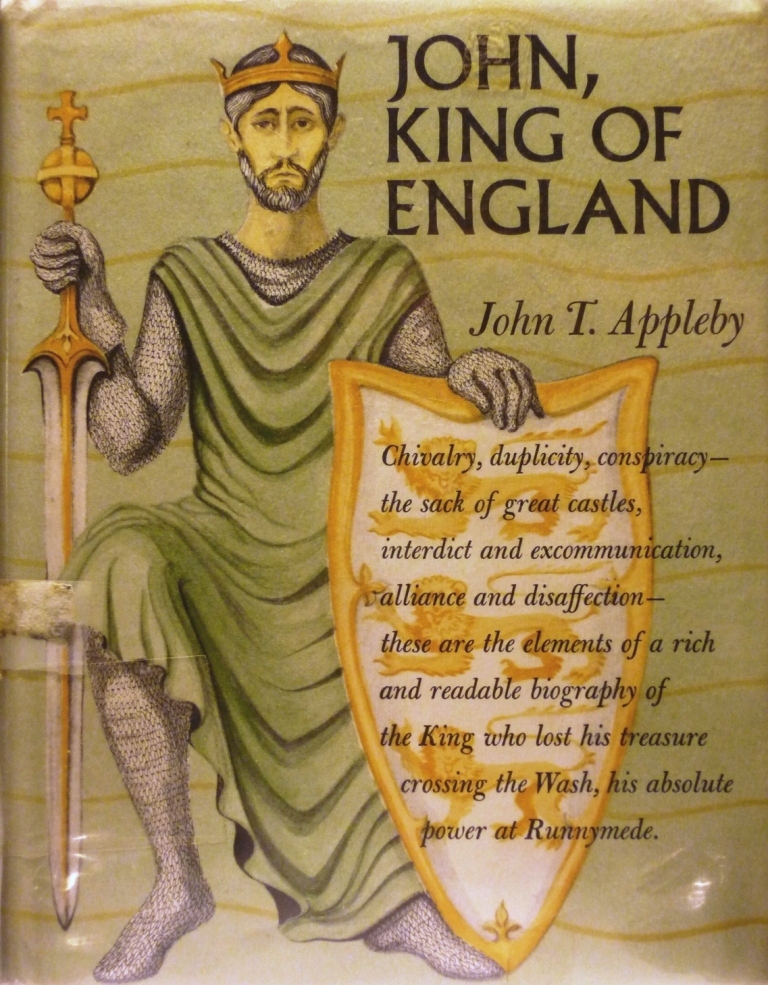
My second half-book for 2013 – John, King of England by John T. Appleby – was an adventure to read because it was a reference book for my novel-in-progress that I had to continue if I wanted the “in progress” bit to remain true.

Yet is was also so dense with historical information, it took forever for me to get through it.  No word of lie, I renewed this book from the library four times for three weeks at a time.

It was also the book that quite decisively taught me how not to go about writing a work of historical fiction, such as I currently am.  But that’s the topic of a whoooole other blog post.

Despite how long it took to read John, King of England, it was very enjoyable.  It was written in a dry, witty style typically attributed to British humour.  For a long time, I assumed the author, John T. Appleby (who died in 1974), was British, only to discover that he was born in Fayetteville, Arkansas, was a Harvard graduate, and at the time of the book’s publication (1959) lived in Washington, D.C.

In the book, I learned about King John’s many failings that made him such a suitable distant villain in the Robin Hood lore.  A small selection:

Continue reading

Switching Teams: Pinch-hitting for the pantsers

I’ve always been a plotter – or perhaps I should say always had been.

In the past in this blog, I’ve written about how I’m left-brained, how I love rules, how I think about my writing constantly, how I try to plan everything, and indeed, how I feel paralysed to start a work of fiction unless I know, at least in a broad sense, how it’s going to end.

That is to say, I’m probably the last person anyone would expect take the proverbial walk to the other side of the field.

And yet, to quote myself in a recent Tweet:

How did it come to this?  By virtue of each of the following:

Continue reading

Don’t Talk About Fight Club: A writer’s paranoia in discussing a WIP

“What’s your novel about?”

Four simple words that never fail to strike terror in my heart.

Part of this is because such a simple query is seeking an equally concise reply – the dreaded “elevator pitch”, which is an art form of brevity on par with the haiku and the perfectly witty Tweet.  Plus, I’m almost never as glib a speaker as I wish when put on the spot like that.

As well, I dislike stating definitively that my WIP is the story of XYZ, when the end result may well come to be significantly different.

Stories are like life: more possibilities and purpose emerge the further along you go.  And just like life, it’s rather invalid to summarize the meaning of it all before it has approached its ultimate end.

Finally, I fear opening myself up to premature criticism of my plot through my inability to properly explain it while still in progress.  Or conversely, premature interest, and subsequent probing questions.

As a result of all this, when Australian historical fiction author Debbie Robson asked me to participate in the blog meme known as The Next Big Thing, I said, “Sure.”

Because why be consistent with one’s own personality traits?

Admittedly, I did offer the caveat that my answers would be vague, superstitious, and paranoiac since I am indeed all of the above.  Furthermore, having since put my blog on its 600-word diet gives me even more of an excuse to be equivocal.  Thus, without further ado:

Continue reading

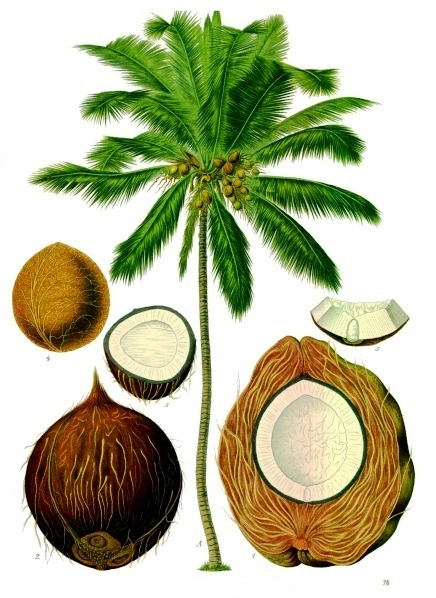
No One Would Make a Coconut Fluoride Rinse: A writer’s frustration with finding the right words

A Distractions & Subtractions post

So, I have this sort of condition….

It’s nothing overly serious – nothing requiring medical treatment or that’s even been officially diagnosed.  More than anything, it makes for something of an odd party trick in response to yet another game folks may play at a party.

The blindfolded, guess-what-food-I’ve-just-put-in-your-mouth game.

Yes, this does, indeed, relate to writing.  Everything does with me, dontcha know?

Continue reading

(Writing) Location, Location

(Or, Why I Can’t Write in Coffee Shops, in a series of confessions)

A Distractions & Subtractions post

There are only two places that I ever do any writing:

  1. On my bed, lying prone, or
  2. Sitting at my dining table

As both of these pieces of furniture are in my apartment, I guess, technically, they count as only one writing place.

Allow me to start again:

There is only one place that I’ll ever do any writing….

This is not to say I’ll only take writing notes at home.  Rather, I’ve done this at work, on transit, on the sidewalk, in the grocery line, on my bike (not while in motion, of course; safety first), and a multitude of other locales.  Indeed, it’s my willingness note-write anywhere (and everywhere) that allows me to write-write anything at all.

But of that write-writing – the actual construction of sentences and paragraphs, foreshadowing and figurative speech – at my humble abode is the only place I can make the magic happen.

Whether I like it or not.

Which I didn’t always….

Continue reading

Writing to the End of My Rope

A Distractions & Subtractions post

A/N: I’m making my way through my Distractions & Subtractions posts.  I only have four more to go after this: two for me and two for my blog readers and followers.

It’s not too late for other readers/followers to submit their own writing subtractions.  I’ll write a blog post for anyone who does.  Who doesn’t want a blog post written in their honour.

Today’s post is one of my own subtractions.  Coming up next week: a post for national/international award winning Australian author Dianne Gray.

—————————————————————————————————-

If you were to visualize yourself in the act of writing, what would it look?

I’ve written about the power of visualization a fair bit here in the past few weeks: about how I every day visualize the sentences and paragraphs I plan to write that night.  About how some personalized visualization can help induce an altered state – can help trick the mind into believing that computer time spend working on your work-in-progress isn’t just more staring at a screen after a long day of doing just that at work.

Someone visualizing him-/herself writing might call up that same imagine of being bend over a computer keyboard, typing up a storm.

Someone else might envision him-/herself writing longhand in an elegant notebook, or frantically scratching down a lightning flash idea or line of dialogue on the back of a grocery store receipt.

Yet another person might see the scenes of his/her WIP unspooling before his/her mind’s eye, like the frames of a movie.  Someone else still might imagine all of the above.

For me, my images of myself in the act of writing are perhaps a little more esoteric:

Continue reading

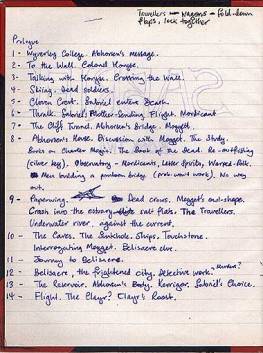
Writing Inside the (Out)Lines

A Distractions & Subtractions post

A/N: Check out my Distractions & Subtractions page to read related posts or to submit your own writing subtractions.  I’m writing a blog post for everyone who makes a submission.

Today’s post is one of my own subtractions.  Coming up next week: a post for horror/dark sci-fi/supernatural writer and satirical essayist Eric J. Baker.

—————————————————————————————————-

There are many different types of writers producing many different types of writing in many different ways.

Yet, if you examine this creature known as “the writer” at its broadest taxonomical subdivision, you’ll find that most of them can be categorized into one of two main groups:

Plotters.

Pantsers.

Pantsers write by the “seat of their pants”.  I’ve also heard pantsers referred to as “discovery writers” – seemingly a euphemism to make what can nonetheless be a perfectly orderly process sound less disorganized.

Plotters make outlines and do pre-writing, sometimes in massive quantities.  I’ve never heard of any other name for plotters, although that two can be interpreted as one of two extremes: Plot, as in a cunning, sexy, leather-clad precision.  Or plot, as in a burial plot.

Continue reading