What’s Good About Twilight: Observations from a non-Twihard with a head-cold

Every time I get really sick, I end up watching something I otherwise would have avoided.

This tendency is born of a desire for easily-digestible entertainment in my physically diminished state.

Last time I was sick, I watched the entire first season of the cartoon Transformers: Prime (and later went follow the show obsessively to its conclusion two seasons later, but that’s a topic for another blog post).

This time, it was the last three movies of Stephenie Meyer’s Twilight Saga that I’d yet to see: Eclipse, Breaking Dawn pt. 1, and Breaking Dawn pt. 2.

I’d previously watched the first two films – Twilight and New Moon – years ago at the behest of Twihard friends, and swore I’d never watch another.  After all, there was just so much to dislike:

  • Edward’s behaviour toward Bella was stalker-ish and controlling
  • Bella, as a character, was dull as a spoon, possessing no interesting qualities nor being an active (as opposed to passive) participant in her own story
  • Edward was way too old to be in a romantic relationship with Bella
  • Neither Bella’s mother nor Edward’s had jobs (unlike both of their fathers)
  • As a whole, the story glamourized unhealthy romance for its target audience of impressionable young girls.

And yet….

Maybe it was the Advil Cold + Sinus at play, but as I watched the final three movies, I found they weren’t all bad.  Indeed, there were a number of elements of the Twilight Saga that found quite enjoyable, both as a consumer of stories and a creator of them:

Continue reading

Adventures in Reading: Soldiers of Misfortune

Every reader has a T(o) B(e) R(ead) pile; sometimes a TBR pile that’s years in the making.

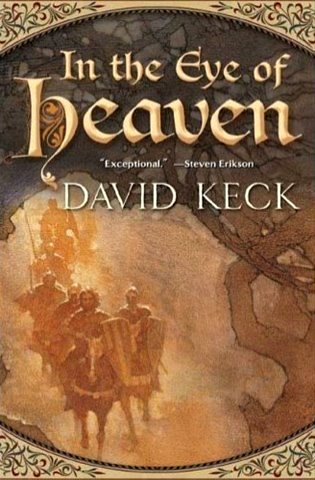
I’m no exception in this regard.  To wit, I’ve been meaning to read the fantasy novel In the Eye of Heaven since its publication in 2007.  Back then, fantasy was my genre of choice, and this book was blurbed by my favourite fantasy author, Jacqueline Carey.

As well, the book’s author – David Keck – is a fellow Canadian and was a debut author in the genre in which I’d hoped to someday be published.

I finally read this book this past May.  It’s success in summiting my eight-years-long TBR pile has a lot to do with its subject matter, as well as my assertion in a previous post that sometimes research for one’s own novel is conducted via fictional sources.

Continue reading

Who’s Gonna Read Your Book: On gender, readers, and the (gendered) state of entertainment

I have no idea whose going to want to read my book.

Don’t get me wrong, I know of several individuals who claim they’re anxiously awaiting the momentous day that I deliver unto them a copy of my novel-in-progress’s final draft:

  • Friends who have had to listen to my talk about my opus for far too long
  • Coworkers
  • Former coworkers
  • Select family members

(My mother, at this point, is only a “maybe”, but I’m fairly confident I’ll be able to either strong-arm or guilt-trip her into the task.)

But in terms of actual readers who are neither emotionally nor relationally obligated to me, I’m not really sure.

Particularly when it comes to actual male readers.

Continue reading

Adventures in Reading: A Monumental Achievement or, When Bad Characters Do Worse

As someone hard at work writing a historical fiction novel, I’ve read a startlingly large number of research books.

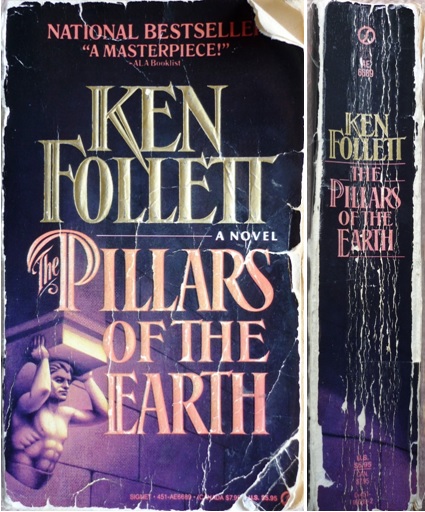
Cover and spine of my worse-for-wear copy of The Pillars of the Earth. Over the course of reading, it eventually became a contest to see which would occur first: me reaching the end or the back cover falling off. The cover won.

Not all of them have been nonfiction.

I suspect that conducting research via fiction is something numerous writers do, and not just those writing historicals.

I’m sure almost every writer has consciously studied existing novels to see how others have handled any number of elements of writing craft, from as broad as character development to as concrete as the number of pages per chapter.

So it was, therefore, that I came to Ken Follett’s The Pillars of the Earth.  Reading this book fell under the purview of “research” for three reasons:

  1. I wanted to study the pacing of such a lengthy (973 pages) novel since my own WIP, though in two novels, will also be a long-ish tale
  2. I wanted to study Follett’s presentation and accuracy of historical details (for all that Pillars takes place about three-quarters of a century earlier than my WIP)
  3. I wanted to read the book before watching the Pillars of the Earth miniseries so I could critique the fidelity of the adaptation in preparation for when my WIP is someday turned into a film.

Cue delusion.

Although, it could happen.  Anything could happen.

I digress.

Continue reading

Adventures in Reading: New Planets and the New Adult Genre

(A/N: Mild spoilers for Beth Revis’s Across the Universe series)

Here’s a scenario for you:

Imagine you had the opportunity to help colonize a new planet located hundreds of light-years away.  This would involve saying goodbye forever to everyone and everything you know and love on Earth, being cryogenically frozen for centuries, and shipped off into the stars.

Would you go?*

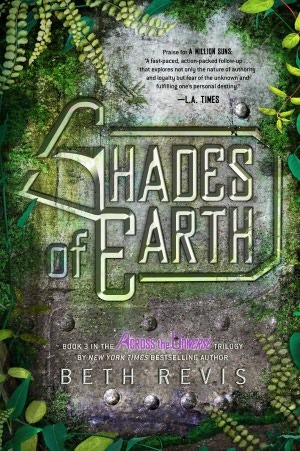
This question is brought to you by a dystopian young adult sci-fi series dealing with this very subject: Beth Revis’s Across the Universe trilogy.  This trilogy includes Across the Universe, A Million Suns, and the final book of the series – Shades of Earth – which I read back in February.

Continue reading

Adventures in Reading: A tale of two tyrants – part 2

Continued from part 1

Tyrant #2: King John of England, 1167 (b) – 1216 (d)

More people are familiar with King John of England than probably realize.

This is not so much due to his own merits, but rather his frequent association with another, better-known individual from history:

Robin Hood.

(King John, just so you know, was a real historical personage.  Robin Hood, meanwhile – not so much.)

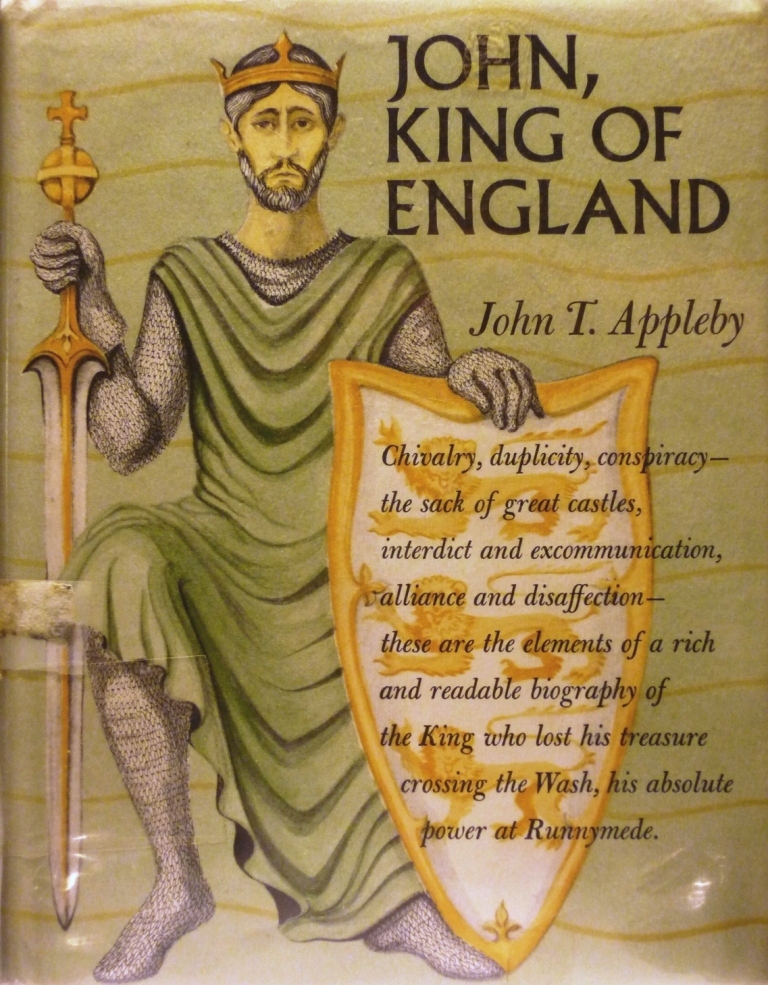
My second half-book for 2013 – John, King of England by John T. Appleby – was an adventure to read because it was a reference book for my novel-in-progress that I had to continue if I wanted the “in progress” bit to remain true.

Yet is was also so dense with historical information, it took forever for me to get through it.  No word of lie, I renewed this book from the library four times for three weeks at a time.

It was also the book that quite decisively taught me how not to go about writing a work of historical fiction, such as I currently am.  But that’s the topic of a whoooole other blog post.

Despite how long it took to read John, King of England, it was very enjoyable.  It was written in a dry, witty style typically attributed to British humour.  For a long time, I assumed the author, John T. Appleby (who died in 1974), was British, only to discover that he was born in Fayetteville, Arkansas, was a Harvard graduate, and at the time of the book’s publication (1959) lived in Washington, D.C.

In the book, I learned about King John’s many failings that made him such a suitable distant villain in the Robin Hood lore.  A small selection:

Continue reading

Adventures in Reading: A tale of two tyrants (in two parts)

PART 1

As previously mentioned, one of my New Year’s Resolutions for 2013 is to read 12 books.

Twelve books in 2013 is a book a month(ish), and once the New Year hit, the countdown was on.

The problem was, on January 1, I was midway through a research book for my novel that I had to finish to continue writing.  Yet, this title couldn’t count as book #1 since I was, indeed, already halfway through it.

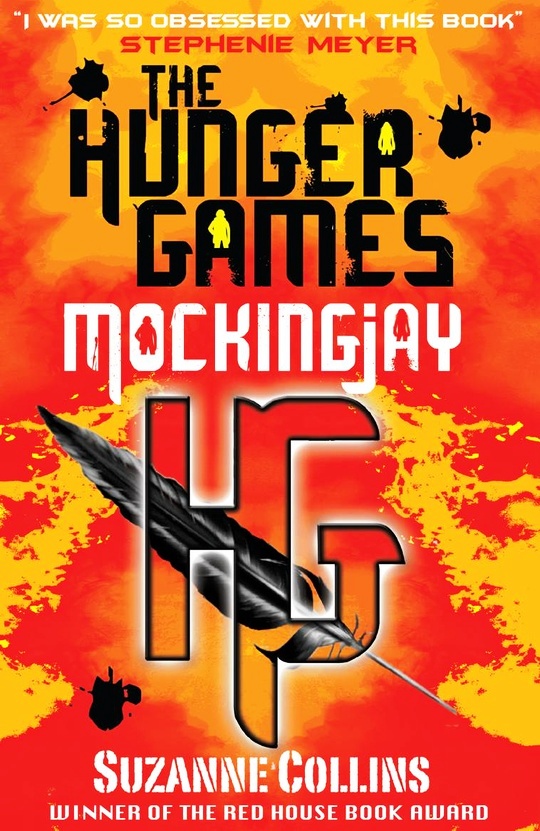
To compromise, I took another book I was also halfway through and counted the two halves as one.  And as it happened, the two books – John, King of England by John T. Appleby and Mockingjay by Suzanne Collins – both dealt with the subject of tyrants and people’s responses to their actions.

Continue reading