On the Anniversary of the Day of My Birth

Today is my birthday.

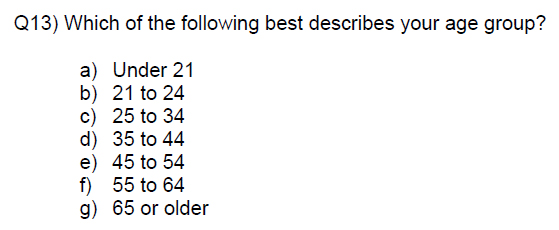
At around 2:00am this morning, I turned officially 35 years old, thus entering, as someone at work (helpfully!) pointed out, whole new age demographic on surveys.

In my mind, though, it actually happened about six months ago, back in June.

I always make the point of pre-aging myself.  This is both to smooth the transition from one year to the next and to prevent subsequently mis-aging my myself, similar to how people often continue to write the old year for months after New Year’s.

Today is also the day I’m supposed to have the draft of my novel-in-progress completed.

That, on the other hand, didn’t happen.

I’ve already decided to forgive myself for that.  It was a self-imposed deadline in any case, so the only person I’m really letting down is myself.  But I refuse to feel let down.

In writing, as in all aspects of life, one only gets out of it what s/he’s put in.  I can honestly say I’ve put a lot of effort and heart into my WIP, and have worked away on it, if not speedily, than with dogged consistency. I’ve been no slouch, so if it’s going to take me longer than I thought to get ‘er done, well, such is life.

The only truly downside is that I’d originally planned to share my novel’s opening on my birthday.

Continue reading

The First Syllable in “November” is “No”

I kind of hate November.

First of all, Movember?  A very worthwhile cause, but moustaches are creepy.

And the end of Daylight Savings Time?  I despise Daylight Savings Time, both the start of it and the end of it, for I find mucking with the time twice a year very jarring to my circadian rhythm.

My birthday is in November, on the Scorpio-Sagittarius cusp.  I quite like my birthday  but resent having my birthday month tainted by icky ‘staches and disruptions to my sleep.

And then there’s NaNoWriMo….

Unlike my fully realized feelings on Movember, DST, and my birthday, I’ve yet to work out how I feel about National Novel Writing Month.

For one thing, I’ve never done it.  Nor am I doing it this year.  Nor am I even sure I want to someday.

Let me re-phrase that last thought: I feel like I do want to do it someday, but I’m not sure if that’s because I relish the challenge it offers or because I feel like I should want to since it’s such a renowned event in the writing community.

Continue reading

Always Say Yes: What writers can learn from our actor friends and improv

(L-R): Nyima Funk, Colin Mochrie, and Wayne Brady from the TV show Whose Line is it Anyway?

(L-R): Nyima Funk, Colin Mochrie, and Wayne Brady from the TV show Whose Line is it Anyway?

Out of all the different types of artistic expression, the artists I seem to befriend most often are actors.

I’m not really sure why this is, for I’m sure as hell no actor.  I have no poker face whatsoever, let alone the ability to re-create a given emotion at will, and body movements range from woodenly awkward to determinedly abrupt.

As well, the mechanics and semiotics of acting are largely lost upon me. I can’t really distinguish a “good” performance from a “spectacular” one, and when I watch movies or plays, so long as the story obeys its own internal logic and follows a satisfying story arc, that’s good enough for me.

I’m a writer; I’m far less interested in the performance of a story than I am in the creation of that’s story’s script.

And yet, as different as my actor friends and their art seems to be from me and mine, I’ve come to discover the usefulness one particular actor’s tool can have for writers.

That tool is improvisation.

Continue reading

Do You Like First-Person Narration?

Yes or no?

Personally: yes.

And no.

Well, which is it?

This isn’t an attempt to be non-committal in my answer.  Rather, I find there are certain circumstances where I love it and all the intimacy and insight it offers into the narrator’s character, and other times where it leaves me cold.

It goes without saying that stories in first-person are told by I – from the point of view of the narrator (who is typically also the protagonist), and likewise told in the narrator’s voice.  As a style of telling a story, it can be found in any genre, but is particularly common in YA, chick lit, memoir, and occasionally historical and romance.

It’s popularity among those who like it seems to be due to the extreme closeness it allows to develop between narrator and reader.

Such ready access to the narrator’s thoughts and observations can be incredibly instructive to the reader in understanding what this person is all about.  So instructive, in fact, that the reader may come to feel like s/he is the narrator, vicariously living every joy and pain that befalls the narrator as his/her their own.  The constant appearance of the word “I” – of the reader hearing it echo over and over within his/her thoughts – can further contribute to this.

What I described above is not the case for me, though.

Continue reading

The Last Five Days & The First Five Things That Fill Them

Today marks my final full week of summer holiday.

Due to a combination of me hoarding my vacation days throughout the year, overtime rolled over from last year, and the fact that my vacation both began and will end with a long weekend, I’ve been able to take off most of the month of August.

I had good intentions to try to maintain my writing schedule over the course of my travels, but – well, we all know what they say about good intentions.

I’ll discuss what I was busy doing while I should have been writing in a future post.  In the meantime, with eight days remaining until I return to work, I’m thinking ahead to three days from now – to the last five days of my vacation, when I leave Ontario and go back home to Vancouver.

Continue reading

Writing While On Vacation

If you came here looking for advice on how to do as the title indicates, I’m sorry to disappoint.

I don’t know how to do it either.

Indeed, not once in at least the last three years I’ve been writing have I successfully maintained my writing schedule while on holiday.

I’ve tried.

In the beginning, my efforts used to be quite fervent.  More recently, I’ve not even bothered to make the attempt, instead consciously choosing to take a short break from writing and resume my regular schedule upon returning home.

That won’t work this time.

Because I’m on holiday for the entire month of August.

Continue reading

Adventures in Reading: Soldiers of Misfortune

Every reader has a T(o) B(e) R(ead) pile; sometimes a TBR pile that’s years in the making.

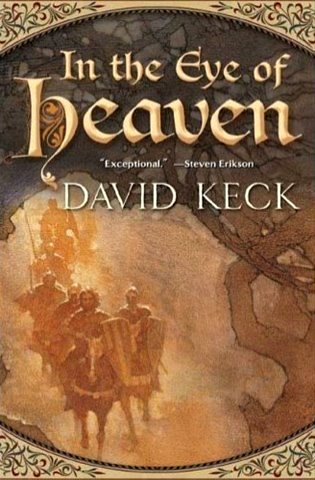
I’m no exception in this regard.  To wit, I’ve been meaning to read the fantasy novel In the Eye of Heaven since its publication in 2007.  Back then, fantasy was my genre of choice, and this book was blurbed by my favourite fantasy author, Jacqueline Carey.

As well, the book’s author – David Keck – is a fellow Canadian and was a debut author in the genre in which I’d hoped to someday be published.

I finally read this book this past May.  It’s success in summiting my eight-years-long TBR pile has a lot to do with its subject matter, as well as my assertion in a previous post that sometimes research for one’s own novel is conducted via fictional sources.

Continue reading

Who’s Gonna Read Your Book II: On genre conventions / unconventional genres

One of the most important and oft-cited tenets of marketing is to identify your target audience.

When it comes to books, an easy was to start doing this is through identifying your novel’s genre, thereby making your target audience the readers of said genre.

Many writers descry genre.  I’ve hear it stated that genre conventions impose limits to creativity and the possibilities a writer can introduce into a story.

Some also claim that genre is a means by which the traditional publishing industry pigeonholes the market by only publishing stories adhering to this or the other trend, which ultimately comes to define various genres as a whole (e.g. the dystopian trend in YA).

Yet, whether one agrees with the above statements or not, genre is the means by which readers have been trained to locate books within the publishing landscape.  Whether a book is traditionally published or self-published, it’s the GPS that helps lead readers to the promised land of similar content and fulfilled expectations.

According to bestselling sci-fi author Hugh Howey,

[W]riting within a genre is a huge first step in becoming discovered. No one is looking for you or your particular book. You are both unknown unknowns. So you better write a book that’s near a specific book….  Random fantasy books sell better than random randomness.

But what happens when your book doesn’t quite fulfill those expectations?  What happens when it meets some of the conventions of its genre, yet blithely disregards others?

What happens if your book is like my book?

Continue reading

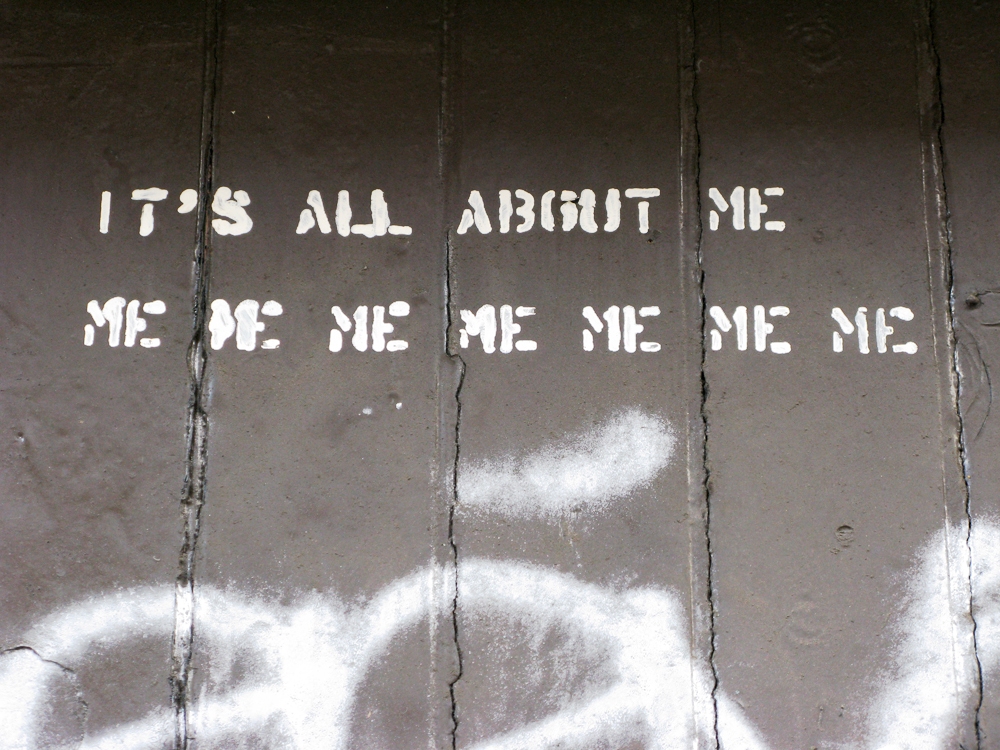
Taking Over Me: On writing, obsession, and the search for artistic balance

Singer Amy Lee of the alternative rock/metal band Evanescence, from whose song the title for this week’s post is borrowed.  There’s something about the grammatical weirdness of the song’s name – the fact that, in ending with the subject “me”, it serves to emphasizes it – that really resonates with my experiences in this subject.

Amy Lee of the alt rock/metal band Evanescence, whose song I borrowed for the title of this post.

When a writer becomes utterly fixated on his/her WIP, is that a sign of artistic revelation or that s/he has become a less well-rounded person?

I’ve twice had it happen where writing has taken over my life, the first time being back in 2004 when I was writing my first (incomplete, shelved) novel, and the second in 2005 when I wrote the first volume of my two-volume historical fiction WIP.

In 2005 especially, I fully gave myself over to my writing.

Continue reading