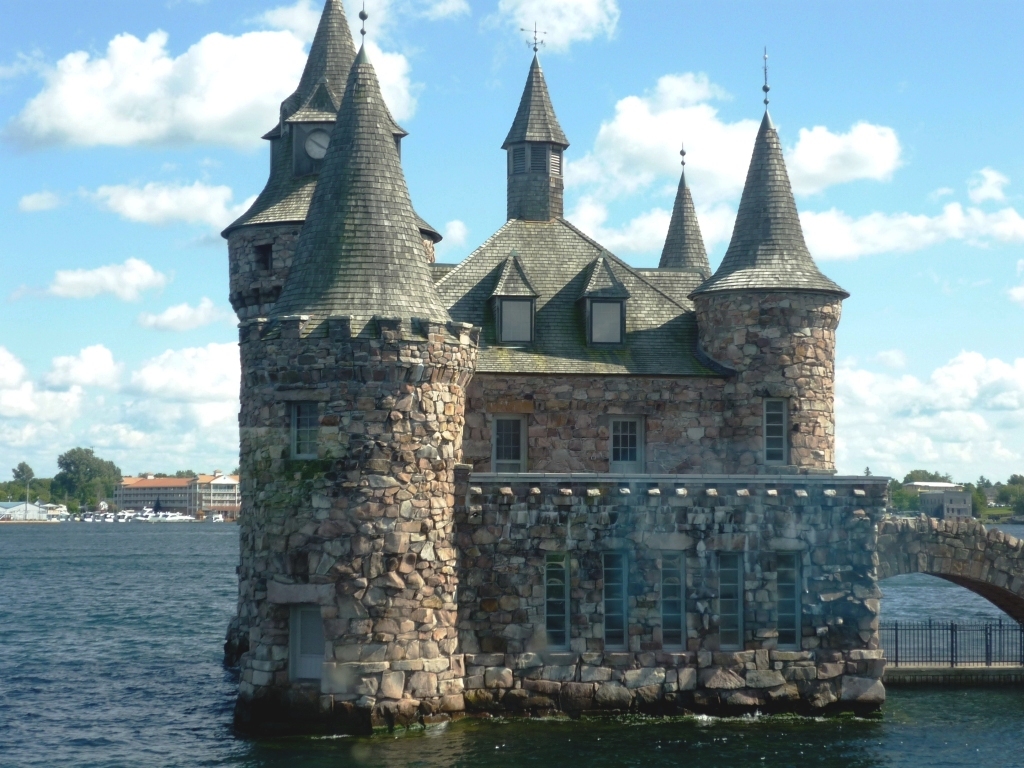
Boldt Castle, Heart Island, as seen from aboard a 1000 Islands boat cruise, St. Lawrence River.
Number of days on vacation thus far: 10
Number of kilometers from home: 4523
Number of cities so far visited: 3 (of 5)

Boldt Castle, Heart Island, as seen from aboard a 1000 Islands boat cruise, St. Lawrence River.
Number of days on vacation thus far: 10
Number of kilometers from home: 4523
Number of cities so far visited: 3 (of 5)

I don’t know how to do it either.
Indeed, not once in at least the last three years I’ve been writing have I successfully maintained my writing schedule while on holiday.
I’ve tried.
In the beginning, my efforts used to be quite fervent. More recently, I’ve not even bothered to make the attempt, instead consciously choosing to take a short break from writing and resume my regular schedule upon returning home.
That won’t work this time.
Because I’m on holiday for the entire month of August.
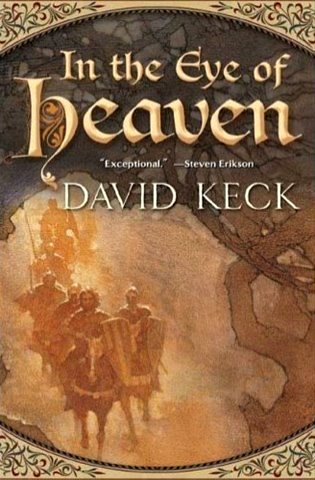
I’m no exception in this regard. To wit, I’ve been meaning to read the fantasy novel In the Eye of Heaven since its publication in 2007. Back then, fantasy was my genre of choice, and this book was blurbed by my favourite fantasy author, Jacqueline Carey.
As well, the book’s author – David Keck – is a fellow Canadian and was a debut author in the genre in which I’d hoped to someday be published.
I finally read this book this past May. It’s success in summiting my eight-years-long TBR pile has a lot to do with its subject matter, as well as my assertion in a previous post that sometimes research for one’s own novel is conducted via fictional sources.
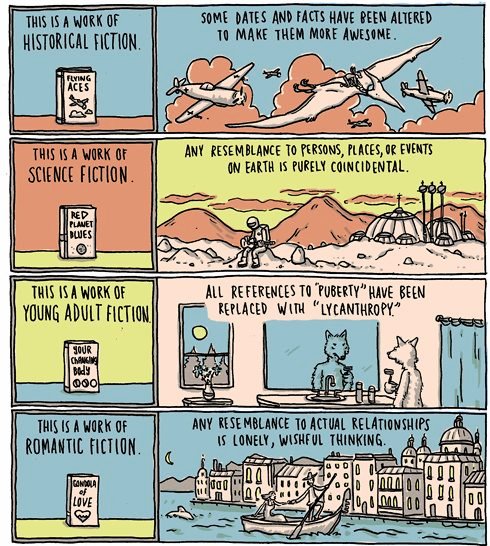 One of the most important and oft-cited tenets of marketing is to identify your target audience.
When it comes to books, an easy was to start doing this is through identifying your novel’s genre, thereby making your target audience the readers of said genre.
Many writers descry genre. I’ve hear it stated that genre conventions impose limits to creativity and the possibilities a writer can introduce into a story.
Some also claim that genre is a means by which the traditional publishing industry pigeonholes the market by only publishing stories adhering to this or the other trend, which ultimately comes to define various genres as a whole (e.g. the dystopian trend in YA).
Yet, whether one agrees with the above statements or not, genre is the means by which readers have been trained to locate books within the publishing landscape. Whether a book is traditionally published or self-published, it’s the GPS that helps lead readers to the promised land of similar content and fulfilled expectations.
According to bestselling sci-fi author Hugh Howey,
[W]riting within a genre is a huge first step in becoming discovered. No one is looking for you or your particular book. You are both unknown unknowns. So you better write a book that’s near a specific book…. Random fantasy books sell better than random randomness.
But what happens when your book doesn’t quite fulfill those expectations? What happens when it meets some of the conventions of its genre, yet blithely disregards others?
What happens if your book is like my book?

Amy Lee of the alt rock/metal band Evanescence, whose song I borrowed for the title of this post.
I’ve twice had it happen where writing has taken over my life, the first time being back in 2004 when I was writing my first (incomplete, shelved) novel, and the second in 2005 when I wrote the first volume of my two-volume historical fiction WIP.
In 2005 especially, I fully gave myself over to my writing.

Long Beach, California
I hate it more than being asked, “Are you still single?” (The answer to which, for the record, is yes. And when phrased that way, it almost makes me want to stay single out of spite.)
More than, “Did you ride your bike in the rain?”
(Answer: I live in Vancouver, BC. It rains about 300 days a year here. I love biking. I hate public transit. I own a good rain coat and shoe covers. And you see me do this every single day; this should no longer come as a shock.)
Even more than, “What’s your novel about?”
(Answer: Err, well, it’s a historical fiction…)
This question for which I hold so much disdain is none other than,
“What have you been up to?”
 I have no idea whose going to want to read my book.
Don’t get me wrong, I know of several individuals who claim they’re anxiously awaiting the momentous day that I deliver unto them a copy of my novel-in-progress’s final draft:
(My mother, at this point, is only a “maybe”, but I’m fairly confident I’ll be able to either strong-arm or guilt-trip her into the task.)
But in terms of actual readers who are neither emotionally nor relationally obligated to me, I’m not really sure.
Particularly when it comes to actual male readers.
A/N: To my fellow Canadians, wishing you all a very Happy Canada Day!
This is something I’ve been pondering quite a bit lately as I continue to move forward in my novel-in-progress: this question of how it is that my writing actually comes to fruition.
Especially given that the ideas I come up with tend to rather small, vague, and decidedly non-earth-shattering in their physical and psychological impact upon me.
Case in point – the idea for this very blog post: I should blog about how my writing ideas evolve.
That was it: the brilliant brainwave in all its unexplained, undeveloped glory.
Or the idea I have for the next chapter in my novel-in-progress: I need to show the protagonist and her enemy starting to see eye-to-eye. Okay – there’s a little more to it than that, but not much. Heaven forbid the Muse offer me something with which I could hit the ground running.
My ideas are like – to borrow from the liberetto of Les Misérables – a little fall of rain: sufficient to get your attention when it speckles the side of your face, but not substantial enough to convince you that anything more will come of it.
For all you know, maybe you were standing too close to a conversation and just got spat on.
 Six years ago, when I was busy working away on my novel (the same novel I’m still working on to this day, no thanks to a six-year writing hiatus), I dreamed of someday being a published author.
This dream had a distinguishing look and feel and smell, as the most vivid dreams often do:
It looked like a hardcover book on a bookstore shelf.
It felt like thick, fibrous paper with ragged-cut edges.
It had that new-book smell; it sounded like my mother bragging to all her friends that her daughter’s book new book was destined to be a bestseller.
It tasted of sweet success.
The steps I had to follow to realize this dream constantly knocked around in my head like the chorus of a song: query, agent, revision, submission, contract, revision, revision, revision, release.
This, of course, was assuming I’d actually made it past steps one and four. It was an assumption I was all too happy to make, for if I didn’t, the dream would be dead before it even fully began. This was the only path to publication.
Then, everything changed….
A new road opened up.

This statement recently arose from a co-worker in response to my having just updated her on my novel-writing progress whilst we performed a menial task at the office.
It’s a common sort of remark, I’m sure, for writers to be told.
“What’s the toughest part about writing a novel?” my co-worker went on to ask me.
I gave my answer without missing a beat: “The hardest part about writing a novel is writing it.”
I wasn’t trying to be facetious, but rather to impress upon her that writing isn’t something anyone successfully just does “someday” without at least a little forethought and without being prepared to change one’s normal way of life.
 Janna G. Noelle