Adventures in Reading: A tale of two tyrants – part 2

Continued from part 1

Tyrant #2: King John of England, 1167 (b) – 1216 (d)

More people are familiar with King John of England than probably realize.

This is not so much due to his own merits, but rather his frequent association with another, better-known individual from history:

Robin Hood.

(King John, just so you know, was a real historical personage.  Robin Hood, meanwhile – not so much.)

My second half-book for 2013 – John, King of England by John T. Appleby – was an adventure to read because it was a reference book for my novel-in-progress that I had to continue if I wanted the “in progress” bit to remain true.

Yet is was also so dense with historical information, it took forever for me to get through it.  No word of lie, I renewed this book from the library four times for three weeks at a time.

It was also the book that quite decisively taught me how not to go about writing a work of historical fiction, such as I currently am.  But that’s the topic of a whoooole other blog post.

Despite how long it took to read John, King of England, it was very enjoyable.  It was written in a dry, witty style typically attributed to British humour.  For a long time, I assumed the author, John T. Appleby (who died in 1974), was British, only to discover that he was born in Fayetteville, Arkansas, was a Harvard graduate, and at the time of the book’s publication (1959) lived in Washington, D.C.

In the book, I learned about King John’s many failings that made him such a suitable distant villain in the Robin Hood lore.  A small selection:

Continue reading

Switching Teams: Pinch-hitting for the pantsers

I’ve always been a plotter – or perhaps I should say always had been.

In the past in this blog, I’ve written about how I’m left-brained, how I love rules, how I think about my writing constantly, how I try to plan everything, and indeed, how I feel paralysed to start a work of fiction unless I know, at least in a broad sense, how it’s going to end.

That is to say, I’m probably the last person anyone would expect take the proverbial walk to the other side of the field.

And yet, to quote myself in a recent Tweet:

How did it come to this?  By virtue of each of the following:

Continue reading

Adventures in Reading: A tale of two tyrants (in two parts)

PART 1

As previously mentioned, one of my New Year’s Resolutions for 2013 is to read 12 books.

Twelve books in 2013 is a book a month(ish), and once the New Year hit, the countdown was on.

The problem was, on January 1, I was midway through a research book for my novel that I had to finish to continue writing.  Yet, this title couldn’t count as book #1 since I was, indeed, already halfway through it.

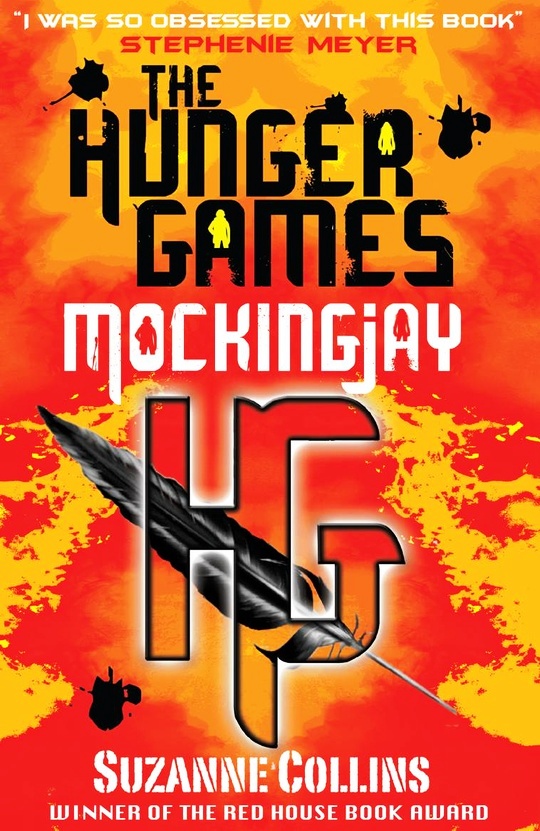
To compromise, I took another book I was also halfway through and counted the two halves as one.  And as it happened, the two books – John, King of England by John T. Appleby and Mockingjay by Suzanne Collins – both dealt with the subject of tyrants and people’s responses to their actions.

Continue reading

Is Anybody Listening? A lament (and relent) about Twitter

I don’t get Twitter.

Or in Twitter parlance: #IDon’tGetIt.

It is, at face value, actually quite simple: an online venue in which one expresses him-/herself in 140 characters, follows the expressions of others, and categorizes his/her own expressions with hashtags for ease of allowing others to follow him/her.

Indeed, Twitter’s liberal use of symbology – #, @, RT, MT, and links beginning with bit.ly or ow.ly or foreshortened forms of other familiar websites (e.g. amzn, goo.gl, wp) – gives it less the air of a web service and more that of a futuristic language.

And who doesn’t think it’s cool to be bi-/tri-/multilingual?

I get all that.

I also get that Twitter’s a great way to keep up with news, which is the primary reason I joined up in the first place.

Only….

What I don’t understand is how some people manage to actually get said news.

Because there is just so much of it.

Continue reading

Come Hell or High Water: A blogging birthday

A rare mid-week and late-night post from me to commemorate my very first post on The Rules of Engagement, which was also mid-week and late-night.

For one year now, my blog has been online.

In that time, I’ve amassed some respectable numbers, learned a lot, and made some wonderful blogging friends.

Even more importantly, though, I’ve regained the confidence I’d lost as a failed blogger in a past writing life.

My original goal for this blog was to add one new post a week, regardless of whatever else might be on my plate.  With the exception of a conscious choice to not blog one time during the Christmas season, I’m happy to report that I’ve not missed a single week.

Consistency is the key to a successful blog, as it is with most other things in life, not the least of which includes writing.

51 posts in year one.  As is often said on the birthdays of people when they turn a year older,

And many more!

(Image source)

——————–

Related posts:

Don’t Talk About Fight Club: A writer’s paranoia in discussing a WIP

“What’s your novel about?”

Four simple words that never fail to strike terror in my heart.

Part of this is because such a simple query is seeking an equally concise reply – the dreaded “elevator pitch”, which is an art form of brevity on par with the haiku and the perfectly witty Tweet.  Plus, I’m almost never as glib a speaker as I wish when put on the spot like that.

As well, I dislike stating definitively that my WIP is the story of XYZ, when the end result may well come to be significantly different.

Stories are like life: more possibilities and purpose emerge the further along you go.  And just like life, it’s rather invalid to summarize the meaning of it all before it has approached its ultimate end.

Finally, I fear opening myself up to premature criticism of my plot through my inability to properly explain it while still in progress.  Or conversely, premature interest, and subsequent probing questions.

As a result of all this, when Australian historical fiction author Debbie Robson asked me to participate in the blog meme known as The Next Big Thing, I said, “Sure.”

Because why be consistent with one’s own personality traits?

Admittedly, I did offer the caveat that my answers would be vague, superstitious, and paranoiac since I am indeed all of the above.  Furthermore, having since put my blog on its 600-word diet gives me even more of an excuse to be equivocal.  Thus, without further ado:

Continue reading

Adventures in Reading: Trials of a time-pressed bibliophile

I used to love reading.

Putting it like that makes it sound like I don’t anymore, which is the furthest thing from true.

Reading is one of my earliest and most enduring pastimes.  As a child, I spent whole Saturdays at my local library.  My childhood summers were a parade of one book after another cracked open in any customary summertime location: the beach, the hammock in the yard, on a family vacation.

There’s nothing I love more than losing myself and my everyday surroundings in a great story.

I just don’t have much time for it anymore.

Of course, I know the adage: “No one has time; you make time.”  I even fully subscribe to this wisdom, in all areas of my life and with all pursuits that are important to me.

And it’s a good thing too, for I really don’t have time.

Continue reading

The Incredible Shrinking Blog Post

Brevity, it’s true, has never been my strength – not when it comes to writing.

In 1999, while in university studying ecology, I had one particular class that came with very specific instructions regarding the format for our laboratory reports.  They were as follows:

  • Double-spaced
  • Times New Roman font
  • 12 point font size
  • 1-inch margins
  • 6 complete pages

For most of my classmates, the problem was always managing to fill the entire six pages.  They would contrive all sorts of strategies: big, blocky tables; subheadings with spaced-out titles; a blank line above the page numbers.

Me – I had the opposite problem: I always needed just a little more room.

So, I contrived a strategy of my own.

This was in the early years of Windows-based word processing programs (as opposed to DOS-based), and a time when Microsoft Word had started gaining greater market share than its rival, Corel WordPerfect.

I’d been a loyal WordPerfect user since its white-on-blue-screened DOS iteration of 1993 (full disclosure: I still WordPerfect) despite the university being a Microsoft-centric campus.  I thus had both WordPerfect and Word on my 1999 computer.

And I chanced upon a discovery: WordPerfect permitted fractional font sizes, while, at that time, Word did not.  That meant that using WordPerfect, I could shrink my font size to 11.8 point (which showed little visual difference from 12 point), and subsequently gain about 3 extra lines of text.

I did this on every single lab report.

I’ve mentioned in one of my earliest posts that I possess what I refer to as the “verbosity gene”, which often leads me to write things twice as long as they’re meant to be.  Exhibit A: My novel-in-progress is actually a novel in two volumes.

Exhibit B: My blog posts.

Continue reading

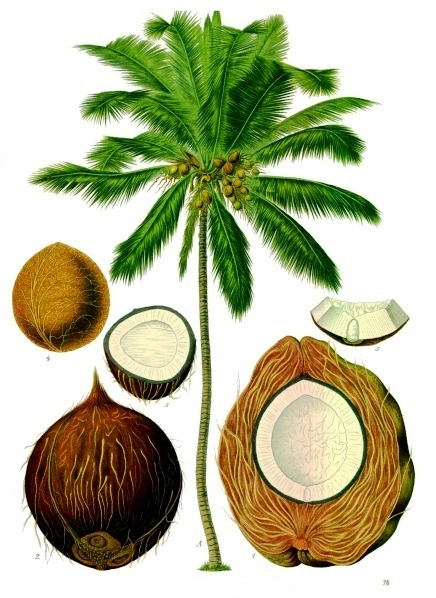
No One Would Make a Coconut Fluoride Rinse: A writer’s frustration with finding the right words

A Distractions & Subtractions post

So, I have this sort of condition….

It’s nothing overly serious – nothing requiring medical treatment or that’s even been officially diagnosed.  More than anything, it makes for something of an odd party trick in response to yet another game folks may play at a party.

The blindfolded, guess-what-food-I’ve-just-put-in-your-mouth game.

Yes, this does, indeed, relate to writing.  Everything does with me, dontcha know?

Continue reading

Writing in the (and What You) Know

(Or, How to Write With Confidence When You’re Not a Subject Matter Expert)

A Distractions & Subtractions post for Rarasaur

The most irritating piece of writing I’ve ever heard first came to me in my youth:

Write what you know.

I was probably about ten years old.

Perhaps you can see the dilemma: what ten-year-old actually knows anything?

The only thing I knew was that I wanted to write, I wanted to write the sort of story I liked to read, and that the sort of stories I liked reading concerned matters that were in no way similar to my unremarkable, ten-year-old life.

My now being 34 years old hasn’t really changed this fact.

And yet, “What what you know” remains one of the most fundamental (and incidentally, fundamentally misunderstood) pieces of writing advice out there.  It can often paralyze writers with doubt that their work lacks credibility, authenticity, and truth.

Continue reading