Always Say Yes: What writers can learn from our actor friends and improv

(L-R): Nyima Funk, Colin Mochrie, and Wayne Brady from the TV show Whose Line is it Anyway?

(L-R): Nyima Funk, Colin Mochrie, and Wayne Brady from the TV show Whose Line is it Anyway?

Out of all the different types of artistic expression, the artists I seem to befriend most often are actors.

I’m not really sure why this is, for I’m sure as hell no actor.  I have no poker face whatsoever, let alone the ability to re-create a given emotion at will, and body movements range from woodenly awkward to determinedly abrupt.

As well, the mechanics and semiotics of acting are largely lost upon me. I can’t really distinguish a “good” performance from a “spectacular” one, and when I watch movies or plays, so long as the story obeys its own internal logic and follows a satisfying story arc, that’s good enough for me.

I’m a writer; I’m far less interested in the performance of a story than I am in the creation of that’s story’s script.

And yet, as different as my actor friends and their art seems to be from me and mine, I’ve come to discover the usefulness one particular actor’s tool can have for writers.

That tool is improvisation.

Continue reading

Do You Like Stories With Changing Viewpoint Characters?

Yes or no?

Me: I actually kind of hate it.

And unlike stories told in present tense, which I also don’t like but am willing to tolerate, I’ve definitely been known to pass over books written from multiple points of view, particularly those with the proverbial “cast of thousands” in which every character has their say

Case in point: everything after A Game of Thrones in George R.R. Martin’s Song of Ice and Fire series.

(Changing viewpoint characters isn’t the only reason I bailed on the series: Martin also has the unfortunate habit of killing off main characters with homicidal regularity.  Which, it could be argued, is a further manifestation of the books’ revolving door of POVs.)

It may well be that the reason I’m not reading so many books with multiple viewpoint characters anymore is because I’ve largely given up on the genre where it’s a near-ubiquitous storytelling element: epic fantasy.

Multiple viewpoints are found in other genres as well: pretty much every genre I’ve ever read in my life (which is to say, every genre) has its contenders.  Indeed, multiple POVs is probably the more common way the tell a story as compared to a single viewpoint character.

But that single, narrating character is my preference both in reading and in writing, for two main reasons:

Continue reading

Do You Like Stories Told in Present Tense?

Yes or no?

Personally: no.

Not even a little, really.

This isn’t to say I won’t read a book if it’s narrated in present tense.  Indeed, I’ve never purposely avoided reading one for that reason, and two of my favourite YA series – Libba Bray’s Gemma Doyle trilogy and Beth Revis’s Across the Universe trilogy – are written in present tense.

But it’s definitely not my favourite style or writing.  I definitely need to brace myself before diving into a story told in this way.  I certainly have no plans to write my own present tense story anytime soon.

Continue reading

Do You Like First-Person Narration?

Yes or no?

Personally: yes.

And no.

Well, which is it?

This isn’t an attempt to be non-committal in my answer.  Rather, I find there are certain circumstances where I love it and all the intimacy and insight it offers into the narrator’s character, and other times where it leaves me cold.

It goes without saying that stories in first-person are told by I – from the point of view of the narrator (who is typically also the protagonist), and likewise told in the narrator’s voice.  As a style of telling a story, it can be found in any genre, but is particularly common in YA, chick lit, memoir, and occasionally historical and romance.

It’s popularity among those who like it seems to be due to the extreme closeness it allows to develop between narrator and reader.

Such ready access to the narrator’s thoughts and observations can be incredibly instructive to the reader in understanding what this person is all about.  So instructive, in fact, that the reader may come to feel like s/he is the narrator, vicariously living every joy and pain that befalls the narrator as his/her their own.  The constant appearance of the word “I” – of the reader hearing it echo over and over within his/her thoughts – can further contribute to this.

What I described above is not the case for me, though.

Continue reading

What’s Good About Twilight: Observations from a non-Twihard with a head-cold

Every time I get really sick, I end up watching something I otherwise would have avoided.

This tendency is born of a desire for easily-digestible entertainment in my physically diminished state.

Last time I was sick, I watched the entire first season of the cartoon Transformers: Prime (and later went follow the show obsessively to its conclusion two seasons later, but that’s a topic for another blog post).

This time, it was the last three movies of Stephenie Meyer’s Twilight Saga that I’d yet to see: Eclipse, Breaking Dawn pt. 1, and Breaking Dawn pt. 2.

I’d previously watched the first two films – Twilight and New Moon – years ago at the behest of Twihard friends, and swore I’d never watch another.  After all, there was just so much to dislike:

  • Edward’s behaviour toward Bella was stalker-ish and controlling
  • Bella, as a character, was dull as a spoon, possessing no interesting qualities nor being an active (as opposed to passive) participant in her own story
  • Edward was way too old to be in a romantic relationship with Bella
  • Neither Bella’s mother nor Edward’s had jobs (unlike both of their fathers)
  • As a whole, the story glamourized unhealthy romance for its target audience of impressionable young girls.

And yet….

Maybe it was the Advil Cold + Sinus at play, but as I watched the final three movies, I found they weren’t all bad.  Indeed, there were a number of elements of the Twilight Saga that found quite enjoyable, both as a consumer of stories and a creator of them:

Continue reading

Writing While On Vacation: A (Semi-Humorous) How-To

 So, my attempt to maintain my writing schedule while on vacation didn’t go so well.

This isn’t to say I did absolute NO writing.  For I did; I wrote five times.  In three weeks.

But two of those times were while on airplanes – that’s a huge step outside of my normal creative environment and my comfort zone.  I even wrote a sex scene while on a plane.  While sitting in the aisle seat no less.  That’s got to count for something!

Right?

It’s not the end of the world that I barely wrote while away.  It’s not like a wagered money on it or anything.

(Maybe I should have wagered money on it; maybe that would have been just the motivator I needed, for I despise spending money needlessly.)

I even learned a few useful tips to follow the next time I go away for an extended period of time.

And so, for those who were duped by my original Writing While On Vacation post, searching in vain for advice from someone who hadn’t a sweet clue how to do so herself, I now offer you the benefit of my newly-acquired wisdom:

Continue reading

Why Writers Should Spend Time With Other Types of Artists

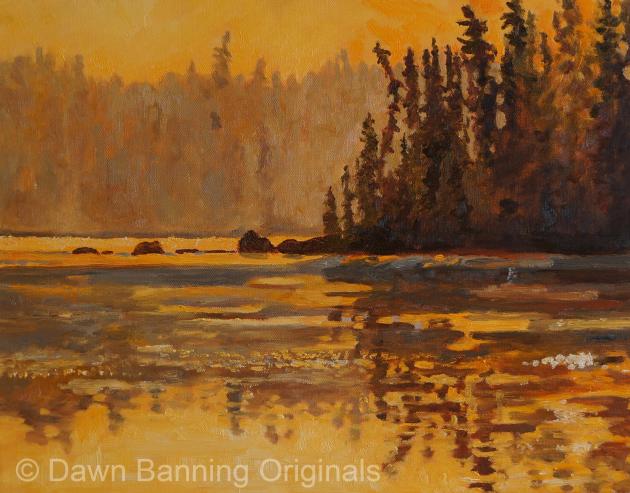
Sun by Dawn Banning

We writers – when we discuss our work and our process at all – tend to restrict said discussion to other writers.

After all, who else could possibly understand our unique brand of crazy?  How can anyone genuinely comprehend, for example, the compulsion to sit up in the dead of the night and scribble down a story idea unless s/he too has endured the utter frustration of greeting the morning with forgotten inspiration?

Artists of other disciplines (e.g. painters, musicians, actors, etc.), while themselves not fully cognizant of what it means to be a narrative writer, might come pretty darn close to understanding us.

Continue reading

The Last Five Days & The First Five Things That Fill Them

Today marks my final full week of summer holiday.

Due to a combination of me hoarding my vacation days throughout the year, overtime rolled over from last year, and the fact that my vacation both began and will end with a long weekend, I’ve been able to take off most of the month of August.

I had good intentions to try to maintain my writing schedule over the course of my travels, but – well, we all know what they say about good intentions.

I’ll discuss what I was busy doing while I should have been writing in a future post.  In the meantime, with eight days remaining until I return to work, I’m thinking ahead to three days from now – to the last five days of my vacation, when I leave Ontario and go back home to Vancouver.

Continue reading

Writing While On Vacation

If you came here looking for advice on how to do as the title indicates, I’m sorry to disappoint.

I don’t know how to do it either.

Indeed, not once in at least the last three years I’ve been writing have I successfully maintained my writing schedule while on holiday.

I’ve tried.

In the beginning, my efforts used to be quite fervent.  More recently, I’ve not even bothered to make the attempt, instead consciously choosing to take a short break from writing and resume my regular schedule upon returning home.

That won’t work this time.

Because I’m on holiday for the entire month of August.

Continue reading