Do You Like Stories With Changing Viewpoint Characters?

Yes or no?

Me: I actually kind of hate it.

And unlike stories told in present tense, which I also don’t like but am willing to tolerate, I’ve definitely been known to pass over books written from multiple points of view, particularly those with the proverbial “cast of thousands” in which every character has their say

Case in point: everything after A Game of Thrones in George R.R. Martin’s Song of Ice and Fire series.

(Changing viewpoint characters isn’t the only reason I bailed on the series: Martin also has the unfortunate habit of killing off main characters with homicidal regularity.  Which, it could be argued, is a further manifestation of the books’ revolving door of POVs.)

It may well be that the reason I’m not reading so many books with multiple viewpoint characters anymore is because I’ve largely given up on the genre where it’s a near-ubiquitous storytelling element: epic fantasy.

Multiple viewpoints are found in other genres as well: pretty much every genre I’ve ever read in my life (which is to say, every genre) has its contenders.  Indeed, multiple POVs is probably the more common way the tell a story as compared to a single viewpoint character.

But that single, narrating character is my preference both in reading and in writing, for two main reasons:
Continue reading

Do You Like Stories Told in Present Tense?

Yes or no?

Personally: no.

Not even a little, really.

This isn’t to say I won’t read a book if it’s narrated in present tense.  Indeed, I’ve never purposely avoided reading one for that reason, and two of my favourite YA series – Libba Bray’s Gemma Doyle trilogy and Beth Revis’s Across the Universe trilogy – are written in present tense.

But it’s definitely not my favourite style or writing.  I definitely need to brace myself before diving into a story told in this way.  I certainly have no plans to write my own present tense story anytime soon.

Continue reading

Do You Like First-Person Narration?

Yes or no?

Personally: yes.

And no.

Well, which is it?

This isn’t an attempt to be non-committal in my answer.  Rather, I find there are certain circumstances where I love it and all the intimacy and insight it offers into the narrator’s character, and other times where it leaves me cold.

It goes without saying that stories in first-person are told by I – from the point of view of the narrator (who is typically also the protagonist), and likewise told in the narrator’s voice.  As a style of telling a story, it can be found in any genre, but is particularly common in YA, chick lit, memoir, and occasionally historical and romance.

It’s popularity among those who like it seems to be due to the extreme closeness it allows to develop between narrator and reader.

Such ready access to the narrator’s thoughts and observations can be incredibly instructive to the reader in understanding what this person is all about.  So instructive, in fact, that the reader may come to feel like s/he is the narrator, vicariously living every joy and pain that befalls the narrator as his/her their own.  The constant appearance of the word “I” – of the reader hearing it echo over and over within his/her thoughts – can further contribute to this.

What I described above is not the case for me, though.

Continue reading

Writing While On Vacation: A (Semi-Humorous) How-To

 So, my attempt to maintain my writing schedule while on vacation didn’t go so well.

This isn’t to say I did absolute NO writing.  For I did; I wrote five times.  In three weeks.

But two of those times were while on airplanes – that’s a huge step outside of my normal creative environment and my comfort zone.  I even wrote a sex scene while on a plane.  While sitting in the aisle seat no less.  That’s got to count for something!

Right?

It’s not the end of the world that I barely wrote while away.  It’s not like a wagered money on it or anything.

(Maybe I should have wagered money on it; maybe that would have been just the motivator I needed, for I despise spending money needlessly.)

I even learned a few useful tips to follow the next time I go away for an extended period of time.

And so, for those who were duped by my original Writing While On Vacation post, searching in vain for advice from someone who hadn’t a sweet clue how to do so herself, I now offer you the benefit of my newly-acquired wisdom:

Continue reading

Why Writers Should Spend Time With Other Types of Artists

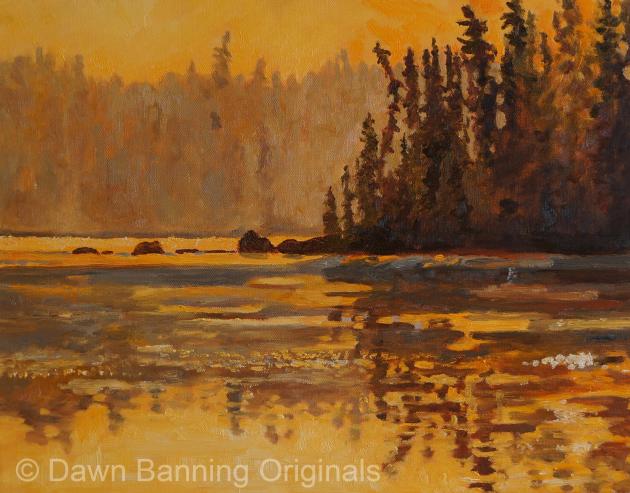
Sun by Dawn Banning

We writers – when we discuss our work and our process at all – tend to restrict said discussion to other writers.

After all, who else could possibly understand our unique brand of crazy?  How can anyone genuinely comprehend, for example, the compulsion to sit up in the dead of the night and scribble down a story idea unless s/he too has endured the utter frustration of greeting the morning with forgotten inspiration?

Artists of other disciplines (e.g. painters, musicians, actors, etc.), while themselves not fully cognizant of what it means to be a narrative writer, might come pretty darn close to understanding us.

Continue reading

Writing While On Vacation

If you came here looking for advice on how to do as the title indicates, I’m sorry to disappoint.

I don’t know how to do it either.

Indeed, not once in at least the last three years I’ve been writing have I successfully maintained my writing schedule while on holiday.

I’ve tried.

In the beginning, my efforts used to be quite fervent.  More recently, I’ve not even bothered to make the attempt, instead consciously choosing to take a short break from writing and resume my regular schedule upon returning home.

That won’t work this time.

Because I’m on holiday for the entire month of August.

Continue reading

Taking Over Me: On writing, obsession, and the search for artistic balance

Singer Amy Lee of the alternative rock/metal band Evanescence, from whose song the title for this week’s post is borrowed.  There’s something about the grammatical weirdness of the song’s name – the fact that, in ending with the subject “me”, it serves to emphasizes it – that really resonates with my experiences in this subject.

Amy Lee of the alt rock/metal band Evanescence, whose song I borrowed for the title of this post.

When a writer becomes utterly fixated on his/her WIP, is that a sign of artistic revelation or that s/he has become a less well-rounded person?

I’ve twice had it happen where writing has taken over my life, the first time being back in 2004 when I was writing my first (incomplete, shelved) novel, and the second in 2005 when I wrote the first volume of my two-volume historical fiction WIP.

In 2005 especially, I fully gave myself over to my writing.

Continue reading

Anyone Can Write a Novel (but not everyone will)

“I want to write a novel someday.”

This statement recently arose from a co-worker in response to my having just updated her on my novel-writing progress whilst we performed a menial task at the office.

It’s a common sort of remark, I’m sure, for writers to be told.

“What’s the toughest part about writing a novel?” my co-worker went on to ask me.

I gave my answer without missing a beat: “The hardest part about writing a novel is writing it.”

I wasn’t trying to be facetious, but rather to impress upon her that writing isn’t something anyone successfully just does “someday” without at least a little forethought and without being prepared to change one’s normal way of life.

Continue reading

On Truth in Storytelling

I have one more piece of favourite writing advice I was unable to fit into my previous post on that subject.

It’s a writing tip whose source I unfortunately can no longer recall.  I’ve searched through all my writing how-to books, photocopied pages, and notes I’ve taken in various journals over the years, but I’ve been unable to find it again:

The job of a story isn’t to tell what’s true; it’s to tell what people believe.

It’s a rather bald statement, to say the least – one that’s stuck with me for years.  It’s yet another touchstone I’ve tried to apply to all my writing, ironically, without even knowing how it’s writer meant for it to be interpreted, for I can’t remember that either.

What does it mean?  I’ve spent the last year and a half since I started writing again searching for an answer to that question.

I believe I’ve found two.

Continue reading

All You (N)ever Wanted: My favourite (and least favourite) writing advice

Ah – writing advice.

If there’s one thing writers do with as much (if not more!) enthusiasm as actual writing, it’s seeking advice on writing.

The internet positively teems with the stuff.  Plus anyone with even the smallest portion of a novel either on their computer or in their soul is guaranteed to own at least one writing how-to book.

(Personally, I have four, plus a duo tang full of photocopied notes, and numerous downloaded webpages.)

But how much this boundless writing advice is of practical use?  At a recent meetup of the writing group I lead, this was the discussion topic du jour: writing advice – the good, the bad, and the ugly.  Everyone was to come prepared to share the best piece(s) of writing advice they’d ever heard/read/received, and the worst piece(s).

I have five pieces of favourite writing advice – the specific tips that have really stuck with me over the years, and helped me straighten out some of my own writing flaws.  And so, I give you…

Continue reading