Switching Teams: Pinch-hitting for the pantsers

I’ve always been a plotter – or perhaps I should say always had been.

In the past in this blog, I’ve written about how I’m left-brained, how I love rules, how I think about my writing constantly, how I try to plan everything, and indeed, how I feel paralysed to start a work of fiction unless I know, at least in a broad sense, how it’s going to end.

That is to say, I’m probably the last person anyone would expect take the proverbial walk to the other side of the field.

And yet, to quote myself in a recent Tweet:

How did it come to this?  By virtue of each of the following:

Continue reading

Come Hell or High Water: A blogging birthday

A rare mid-week and late-night post from me to commemorate my very first post on The Rules of Engagement, which was also mid-week and late-night.

For one year now, my blog has been online.

In that time, I’ve amassed some respectable numbers, learned a lot, and made some wonderful blogging friends.

Even more importantly, though, I’ve regained the confidence I’d lost as a failed blogger in a past writing life.

My original goal for this blog was to add one new post a week, regardless of whatever else might be on my plate.  With the exception of a conscious choice to not blog one time during the Christmas season, I’m happy to report that I’ve not missed a single week.

Consistency is the key to a successful blog, as it is with most other things in life, not the least of which includes writing.

51 posts in year one.  As is often said on the birthdays of people when they turn a year older,

And many more!

(Image source)

——————–

Related posts:

Don’t Talk About Fight Club: A writer’s paranoia in discussing a WIP

“What’s your novel about?”

Four simple words that never fail to strike terror in my heart.

Part of this is because such a simple query is seeking an equally concise reply – the dreaded “elevator pitch”, which is an art form of brevity on par with the haiku and the perfectly witty Tweet.  Plus, I’m almost never as glib a speaker as I wish when put on the spot like that.

As well, I dislike stating definitively that my WIP is the story of XYZ, when the end result may well come to be significantly different.

Stories are like life: more possibilities and purpose emerge the further along you go.  And just like life, it’s rather invalid to summarize the meaning of it all before it has approached its ultimate end.

Finally, I fear opening myself up to premature criticism of my plot through my inability to properly explain it while still in progress.  Or conversely, premature interest, and subsequent probing questions.

As a result of all this, when Australian historical fiction author Debbie Robson asked me to participate in the blog meme known as The Next Big Thing, I said, “Sure.”

Because why be consistent with one’s own personality traits?

Admittedly, I did offer the caveat that my answers would be vague, superstitious, and paranoiac since I am indeed all of the above.  Furthermore, having since put my blog on its 600-word diet gives me even more of an excuse to be equivocal.  Thus, without further ado:

Continue reading

The Incredible Shrinking Blog Post

Brevity, it’s true, has never been my strength – not when it comes to writing.

In 1999, while in university studying ecology, I had one particular class that came with very specific instructions regarding the format for our laboratory reports.  They were as follows:

  • Double-spaced
  • Times New Roman font
  • 12 point font size
  • 1-inch margins
  • 6 complete pages

For most of my classmates, the problem was always managing to fill the entire six pages.  They would contrive all sorts of strategies: big, blocky tables; subheadings with spaced-out titles; a blank line above the page numbers.

Me – I had the opposite problem: I always needed just a little more room.

So, I contrived a strategy of my own.

This was in the early years of Windows-based word processing programs (as opposed to DOS-based), and a time when Microsoft Word had started gaining greater market share than its rival, Corel WordPerfect.

I’d been a loyal WordPerfect user since its white-on-blue-screened DOS iteration of 1993 (full disclosure: I still WordPerfect) despite the university being a Microsoft-centric campus.  I thus had both WordPerfect and Word on my 1999 computer.

And I chanced upon a discovery: WordPerfect permitted fractional font sizes, while, at that time, Word did not.  That meant that using WordPerfect, I could shrink my font size to 11.8 point (which showed little visual difference from 12 point), and subsequently gain about 3 extra lines of text.

I did this on every single lab report.

I’ve mentioned in one of my earliest posts that I possess what I refer to as the “verbosity gene”, which often leads me to write things twice as long as they’re meant to be.  Exhibit A: My novel-in-progress is actually a novel in two volumes.

Exhibit B: My blog posts.

Continue reading

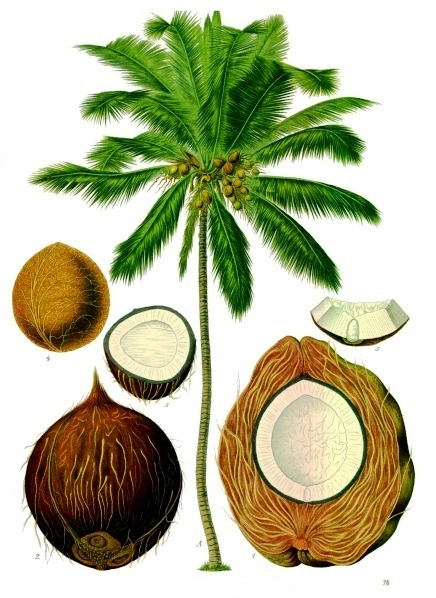
No One Would Make a Coconut Fluoride Rinse: A writer’s frustration with finding the right words

A Distractions & Subtractions post

So, I have this sort of condition….

It’s nothing overly serious – nothing requiring medical treatment or that’s even been officially diagnosed.  More than anything, it makes for something of an odd party trick in response to yet another game folks may play at a party.

The blindfolded, guess-what-food-I’ve-just-put-in-your-mouth game.

Yes, this does, indeed, relate to writing.  Everything does with me, dontcha know?

Continue reading

Writing in the (and What You) Know

(Or, How to Write With Confidence When You’re Not a Subject Matter Expert)

A Distractions & Subtractions post for Rarasaur

The most irritating piece of writing I’ve ever heard first came to me in my youth:

Write what you know.

I was probably about ten years old.

Perhaps you can see the dilemma: what ten-year-old actually knows anything?

The only thing I knew was that I wanted to write, I wanted to write the sort of story I liked to read, and that the sort of stories I liked reading concerned matters that were in no way similar to my unremarkable, ten-year-old life.

My now being 34 years old hasn’t really changed this fact.

And yet, “What what you know” remains one of the most fundamental (and incidentally, fundamentally misunderstood) pieces of writing advice out there.  It can often paralyze writers with doubt that their work lacks credibility, authenticity, and truth.

Continue reading

Writing Inside the (Out)Lines – Redux: A Creative Departure

(Or, Why Much of What You Plan in Your Outline Will Get Changed Along the Way)

A Distractions & Subtractions post for Rule of Stupid

Writing a novel is an endeavour of many emotions:

  • The excitement at having an idea take root in your head.
  • The pride you feel every time you sit down at the computer and add new words.
  • The anxiety that maybe you won’t be able to capture your idea in words as clearly as it plays out in your head.
  • The satisfaction of when all the plot pieces finally fall into place in your mind, and you’re finally convinced that yes, this story works.
  • And then, after months or even years of dedication, when the novel is finally completed, a satisfaction of a different sort that results from having successfully achieved a difficult, long-term goal.

But sometimes, this latter satisfaction comes prematurely; sometimes, satisfaction #2 and satisfaction #1 commingle, until they end up one in the same.

That is to say, sometimes, having devised a fully functional plot in one’s head (or on paper, or on the screen) feels like such a sense of accomplishment, the subsequent desire to actually write the novel disappears.

Continue reading

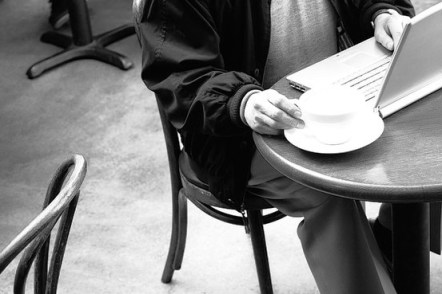
(Writing) Location, Location

(Or, Why I Can’t Write in Coffee Shops, in a series of confessions)

A Distractions & Subtractions post

There are only two places that I ever do any writing:

  1. On my bed, lying prone, or
  2. Sitting at my dining table

As both of these pieces of furniture are in my apartment, I guess, technically, they count as only one writing place.

Allow me to start again:

There is only one place that I’ll ever do any writing….

This is not to say I’ll only take writing notes at home.  Rather, I’ve done this at work, on transit, on the sidewalk, in the grocery line, on my bike (not while in motion, of course; safety first), and a multitude of other locales.  Indeed, it’s my willingness note-write anywhere (and everywhere) that allows me to write-write anything at all.

But of that write-writing – the actual construction of sentences and paragraphs, foreshadowing and figurative speech – at my humble abode is the only place I can make the magic happen.

Whether I like it or not.

Which I didn’t always….

Continue reading

Living an Artist’s Life in a Workaday World

(A How-To)

A Distractions & Subtractions post for Dianne Gray
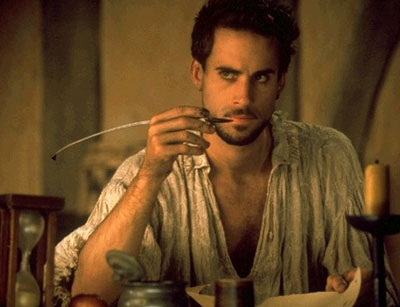
It’s hard to know whether there’s been an era more detrimental to living the life of an artist than the current one.

The temptation is certainly strong to say there hasn’t been – that the Ancient Greeks, Romans, and Egyptians, the Renaissance (wo)men, the Elizabethans, and the Romantics with their sculpture and architecture, their mosaics and genre scenes, their busts and paintings, their music, literature and frescos, their theatre, and their landscape-focused writing, painting, and composing that seem to burst from the pages of history texts all revered their artists.

Maybe they did.

But perhaps their artists suffered the historical equivalent to what many artists face today – that is to say, a stifling daily grind of the working world with all its attendant hassles that is the sworn enemy of creativity.

There’s the commuting, the budgets, deadlines, overtime, stagnation, trying to do more with less, spending more hours a week at work than not at work, and the constant competition for more, better, and now that exemplifies a consumer-based economy.

All of these practicalities of life leave the modern artistically-inclined especially feeling drained, de-animated, and deprived of the space, reflection, and deliberation required to let loose their imaginations and give their creative musings a tangible form.

Such is no different for national/international award winning Australian author Dianne Gray, whose writing subtraction speaks wholly to this artist/workaday dichotomy many of us struggle to reconcile.

Continue reading

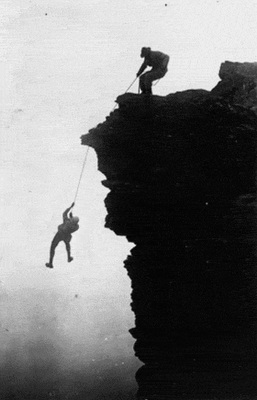
Writing to the End of My Rope

A Distractions & Subtractions post

A/N: I’m making my way through my Distractions & Subtractions posts.  I only have four more to go after this: two for me and two for my blog readers and followers.

It’s not too late for other readers/followers to submit their own writing subtractions.  I’ll write a blog post for anyone who does.  Who doesn’t want a blog post written in their honour.

Today’s post is one of my own subtractions.  Coming up next week: a post for national/international award winning Australian author Dianne Gray.

—————————————————————————————————-

If you were to visualize yourself in the act of writing, what would it look?

I’ve written about the power of visualization a fair bit here in the past few weeks: about how I every day visualize the sentences and paragraphs I plan to write that night.  About how some personalized visualization can help induce an altered state – can help trick the mind into believing that computer time spend working on your work-in-progress isn’t just more staring at a screen after a long day of doing just that at work.

Someone visualizing him-/herself writing might call up that same imagine of being bend over a computer keyboard, typing up a storm.

Someone else might envision him-/herself writing longhand in an elegant notebook, or frantically scratching down a lightning flash idea or line of dialogue on the back of a grocery store receipt.

Yet another person might see the scenes of his/her WIP unspooling before his/her mind’s eye, like the frames of a movie.  Someone else still might imagine all of the above.

For me, my images of myself in the act of writing are perhaps a little more esoteric:

Continue reading